
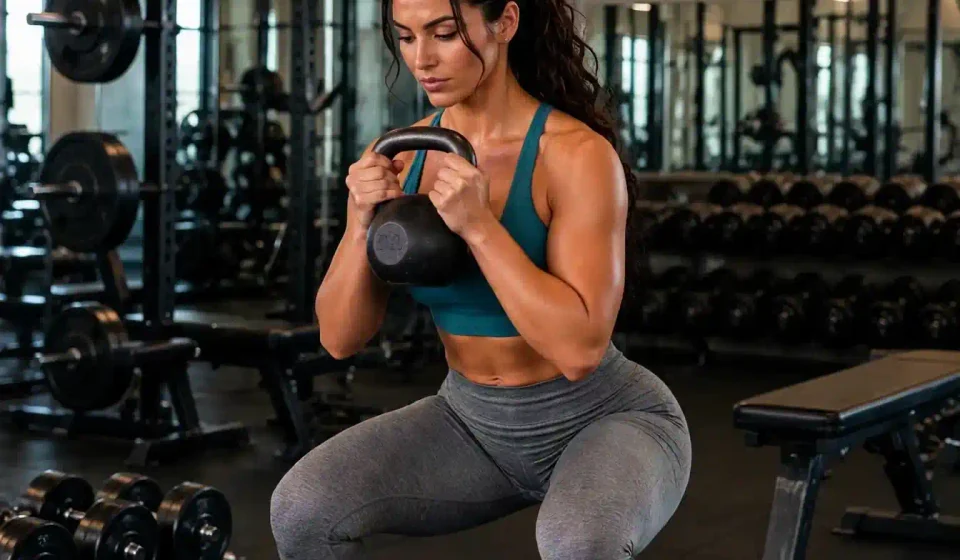

If you want a simple way to build strength, improve coordination, and make your workouts more interesting, kettlebell training is worth exploring. A kettlebell is a compact piece of fitness equipment that can be used for a wide range of exercises, from squats and rows to controlled full-body movements.
Kettlebell Workout for Beginners: 7 Full-Body Exercises The good news is that you do not need an advanced workout routine to get started. With a few basic exercises, proper technique, and a suitable weight, beginners can create a balanced kettlebell workout that targets several major muscle groups.
In this guide, you’ll discover seven beginner-friendly kettlebell exercises, how to perform each movement, and how to combine them into a simple full-body routine.
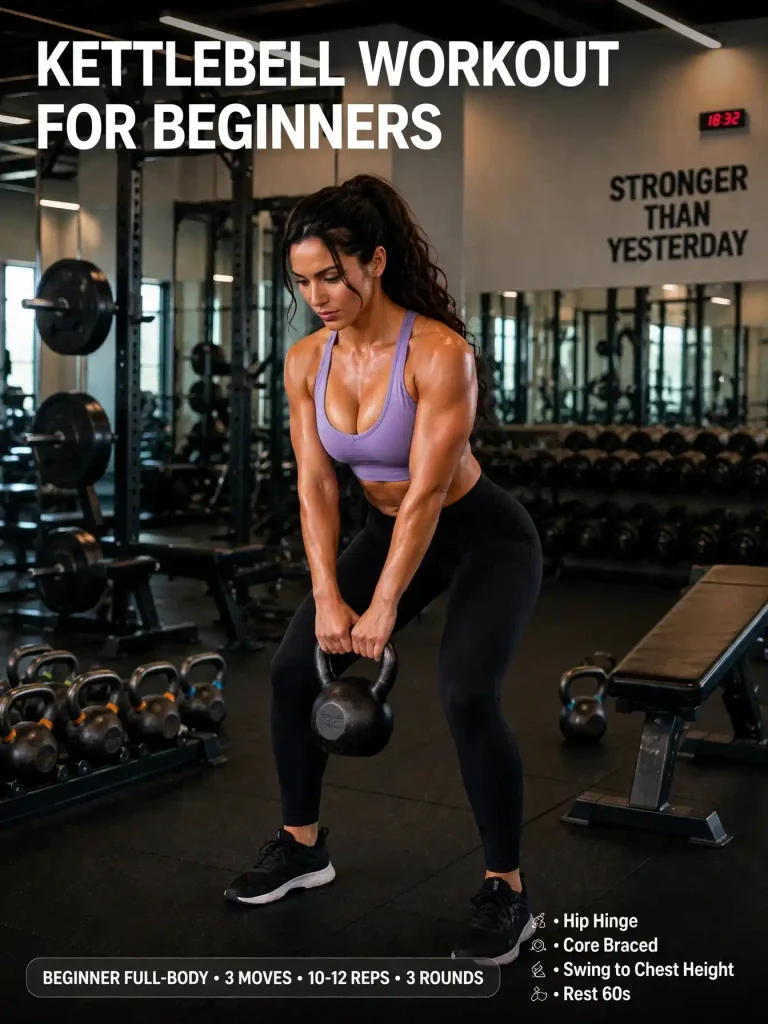
What Is a Kettlebell Workout?
A kettlebell workout uses a weighted exercise tool with a handle to perform strength and conditioning movements.
Unlike traditional dumbbells, kettlebells have their weight positioned below the handle. This design changes how the weight moves and challenges your coordination, grip, and body control.
Kettlebells can be used for:
- Full-body strength exercises
- Lower-body movements
- Upper-body training
- Core stability exercises
- Controlled cardiovascular conditioning
They are also convenient for home workouts because one suitable kettlebell can support several different exercises.
Benefits of Kettlebell Training for Beginners
Kettlebell training offers several advantages when exercises are performed with appropriate resistance and good technique.
1. Works Multiple Muscle Groups
Many kettlebell exercises involve more than one muscle group. For example, a goblet squat works the legs and glutes while the core helps stabilize the body.
2. Develops Functional Strength
Movements such as squats, rows, and deadlifts use movement patterns that also appear in everyday activities.
3. Improves Coordination
Holding and moving a kettlebell requires control and coordination. Practising slowly can help beginners become more familiar with these movements.
4. Supports Core Stability
Your abdominal and back muscles help stabilize your body during many kettlebell exercises.
5. Suitable for Home Workouts
Kettlebells take up relatively little space and can be used for a variety of exercises without needing a large collection of equipment.
7 Best Kettlebell Exercises for Beginners
Start with a light kettlebell that you can control comfortably. Learn each movement without rushing, and focus on technique before increasing the resistance.
1. Kettlebell Goblet Squat
Main muscles worked: Quadriceps, glutes, hamstrings, and core.
The goblet squat is one of the easiest kettlebell exercises to learn. Holding the weight in front of your chest helps you practise a controlled squat.
How to do it:
- Stand with your feet approximately shoulder-width apart.
- Hold the kettlebell by its handles or sides in front of your chest.
- Keep your chest comfortably upright and your feet flat.
- Bend your hips and knees to lower into a comfortable squat.
- Push through your feet to return to standing.
Beginner tip: Only squat as low as you can while maintaining control. You do not need to force a deep squat.
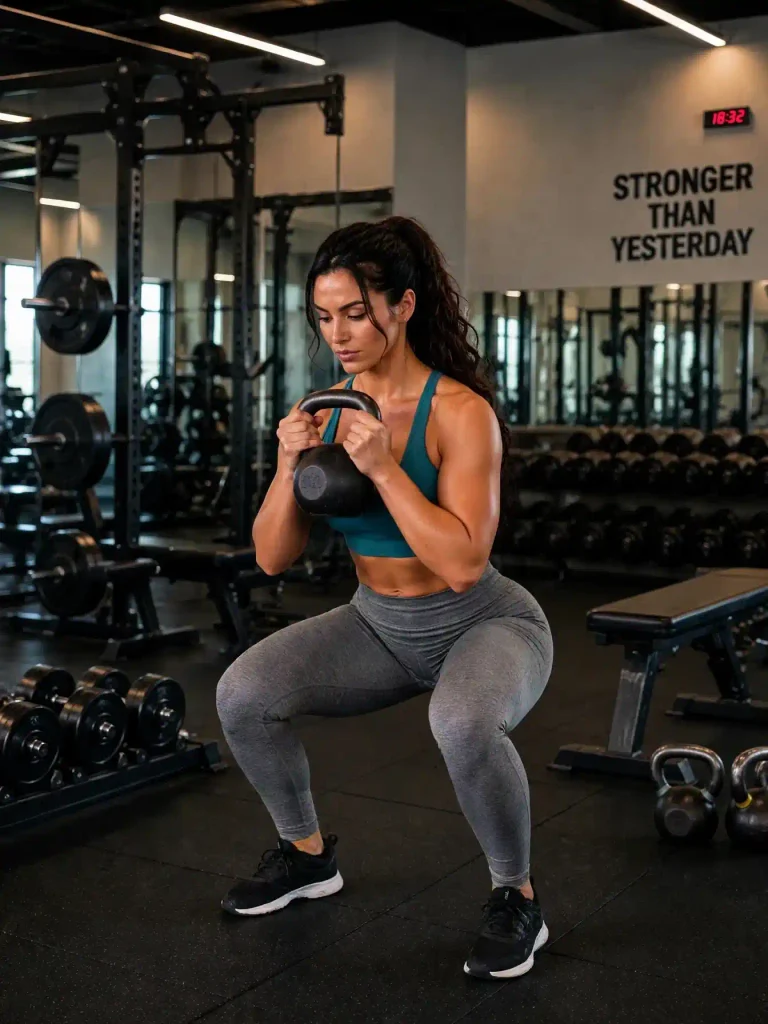
2. Kettlebell Deadlift
Main muscles worked: Glutes, hamstrings, and back muscles.
The kettlebell deadlift teaches a basic hip-hinge movement. It is a useful starting point before learning more advanced kettlebell exercises.
How to do it:
- Place the kettlebell on the floor between your feet.
- Stand with your feet approximately hip-width apart.
- Bend your hips and knees to reach the handle.
- Keep your back in a comfortable neutral position.
- Hold the handle and push through your feet as you stand.
- Slowly lower the kettlebell back to the floor.
Beginner tip: Think about moving your hips backward rather than simply bending your back.
3. Single-Arm Kettlebell Row
Main muscles worked: Upper back, lats, shoulders, and arms.
The single-arm row helps strengthen the upper back and teaches you to control a weight on one side of your body.
How to do it:
- Place one hand on a stable bench or chair for support.
- Hold the kettlebell in your opposite hand.
- Lean forward slightly while keeping your back comfortable and stable.
- Pull the kettlebell toward your hip.
- Lower it slowly and repeat.
- Switch sides.
Beginner tip: Avoid twisting your body to lift the weight. Keep the movement controlled.
4. Kettlebell Floor Press
Main muscles worked: Chest, shoulders, and triceps.
The floor press is a beginner-friendly upper-body exercise. Performing it on the floor limits the range of movement and provides additional support.
How to do it:
- Lie on your back with your knees bent and feet resting on the floor.
- Hold a light kettlebell securely in one hand.
- Keep your upper arm resting comfortably on the floor.
- Press the kettlebell upward without locking your elbow forcefully.
- Slowly lower it back to the starting position.
- Complete the movement on the other side.
Beginner tip: Practise with a light weight and make sure you can hold the kettlebell securely throughout the movement.
5. Kettlebell Reverse Lunge
Main muscles worked: Quadriceps, glutes, hamstrings, and core.
Reverse lunges help develop lower-body strength and balance. Beginners can first practise the movement without a weight.
How to do it:
- Stand upright with your feet comfortably apart.
- Hold a light kettlebell securely in front of your body if you are ready to add resistance.
- Step one foot backward.
- Bend both knees slightly while keeping your front foot stable.
- Push through the front foot to return to standing.
- Repeat on the opposite side.
Beginner tip: Use a shorter step if that feels more comfortable. Hold a stable support if you need help with balance.
6. Kettlebell Suitcase Carry
Main muscles worked: Core, grip, shoulders, and stabilizing muscles.
The suitcase carry is a simple exercise that involves walking while holding a kettlebell in one hand. It challenges your ability to maintain a steady posture.
How to do it:
- Stand tall with a kettlebell beside one leg.
- Pick it up using a controlled hip hinge.
- Hold the handle securely with your arm beside your body.
- Walk slowly while keeping your shoulders level.
- Put the kettlebell down carefully.
- Repeat on the other side.
Beginner tip: Choose a clear walking space and avoid leaning toward the side holding the kettlebell.
7. Kettlebell Dead Bug Hold
Main muscles worked: Abdominal muscles and deep core stabilizers.
This is a controlled core exercise that can be performed without moving the kettlebell. Beginners should first learn the movement without added weight.
How to do it:
- Lie on your back with your knees bent and feet lifted into a comfortable tabletop position.
- Hold a light kettlebell securely with both hands above your chest, if you can do so safely.
- Keep your lower back in a comfortable, stable position.
- Slowly lower one foot toward the floor while maintaining control.
- Return to the starting position and alternate sides.
Beginner tip: If holding the kettlebell feels uncomfortable or difficult to control, leave it aside and perform the exercise with your hands empty.
Beginner Kettlebell Full-Body Workout Routine
Once you understand the seven movements, you can combine them into a simple workout.
Start with one or two comfortable sets of each exercise. Rest when needed, and prioritize controlled technique over completing the routine quickly.
| Exercise | Suggested repetitions |
|---|---|
| Goblet squat | 8–10 |
| Kettlebell deadlift | 8–10 |
| Single-arm row | 8 per side |
| Floor press | 8 per side |
| Reverse lunge | 6 per side |
| Suitcase carry | 20–30 seconds per side |
| Dead bug | 6 per side |
These are starting suggestions, not targets you must reach. Use fewer repetitions or an easier variation when needed.
How Often Should Beginners Do Kettlebell Workouts?
For beginners, two non-consecutive strength-training sessions per week can be a reasonable starting point, depending on your experience and recovery.
You can combine kettlebell sessions with comfortable walking, mobility exercises, or other enjoyable activities.
Allow time for recovery between strength sessions, especially when you are learning new movements.
How to Choose the Right Kettlebell Weight
Choosing a suitable kettlebell is important because a weight that is too heavy can make it difficult to maintain good technique.
When choosing a kettlebell, consider:
- Control: You should be able to move it smoothly.
- Grip: The handle should feel secure and comfortable.
- Technique: Your posture should remain stable throughout each repetition.
- Exercise type: Some movements may require less weight than others.
- Experience: Beginners should prioritize learning the movements rather than lifting heavier weights.
You do not need to use the same weight for every exercise. A lighter kettlebell may be more appropriate for pressing and core movements than for some lower-body exercises.
Common Kettlebell Training Mistakes to Avoid
Kettlebell exercises are simple to learn, but small technique mistakes can affect how comfortably you perform them.
Choosing a Weight That Is Too Heavy
A heavier kettlebell is not automatically better. Start with a manageable resistance that allows you to move smoothly.
Rushing Through Repetitions
Fast movements can make it harder to maintain control. Beginners should learn the correct movement pattern before increasing speed.
Using the Back Instead of the Hips
During deadlifts, focus on moving your hips backward and forward. Avoid repeatedly rounding your back to reach the kettlebell.
Ignoring Grip and Balance
Make sure you can hold the handle securely. Choose stable positions and clear spaces for exercises such as rows and carries.
Skipping the Warm-Up
Begin with a few minutes of comfortable movement, such as walking and gentle mobility exercises.
Safety Tips for Kettlebell Beginners
Before starting your workout, keep these simple safety points in mind:
- Use a kettlebell you can control comfortably.
- Check that the handle is dry and secure.
- Exercise on a stable, non-slippery surface.
- Keep enough space around you.
- Avoid swinging movements until you have learned the necessary technique with qualified guidance.
- Stop if you experience sharp pain, dizziness, or unusual discomfort.
- Ask a qualified fitness professional to check your technique if you are unsure.
If you have an injury or a health condition that may affect exercise, seek professional guidance before beginning a new training routine.
Frequently Asked Questions
Is kettlebell training good for beginners?
Yes. Many kettlebell exercises, including goblet squats, deadlifts, and rows, can be adapted for beginners. Start with manageable resistance and learn each movement carefully.
Can I do a full-body kettlebell workout at home?
Yes. A kettlebell, a clear exercise space, and a stable support for certain movements can be enough for a basic home routine.
How many kettlebell exercises should a beginner do?
Starting with four to seven simple movements can provide a balanced introduction. You do not need to perform every possible kettlebell exercise in one session.
Can kettlebells help improve strength?
Kettlebells can be used for resistance training that develops strength when exercises are performed consistently with appropriate technique and resistance.
Do I need two kettlebells?
No. One suitable kettlebell is enough for many beginner exercises. You can gradually explore other equipment if your training needs change.
Are kettlebell swings suitable for beginners?
Kettlebell swings are more technically demanding than basic exercises such as deadlifts and squats. Beginners should learn the hip-hinge movement first and seek qualified instruction before attempting swings.
Final Thoughts
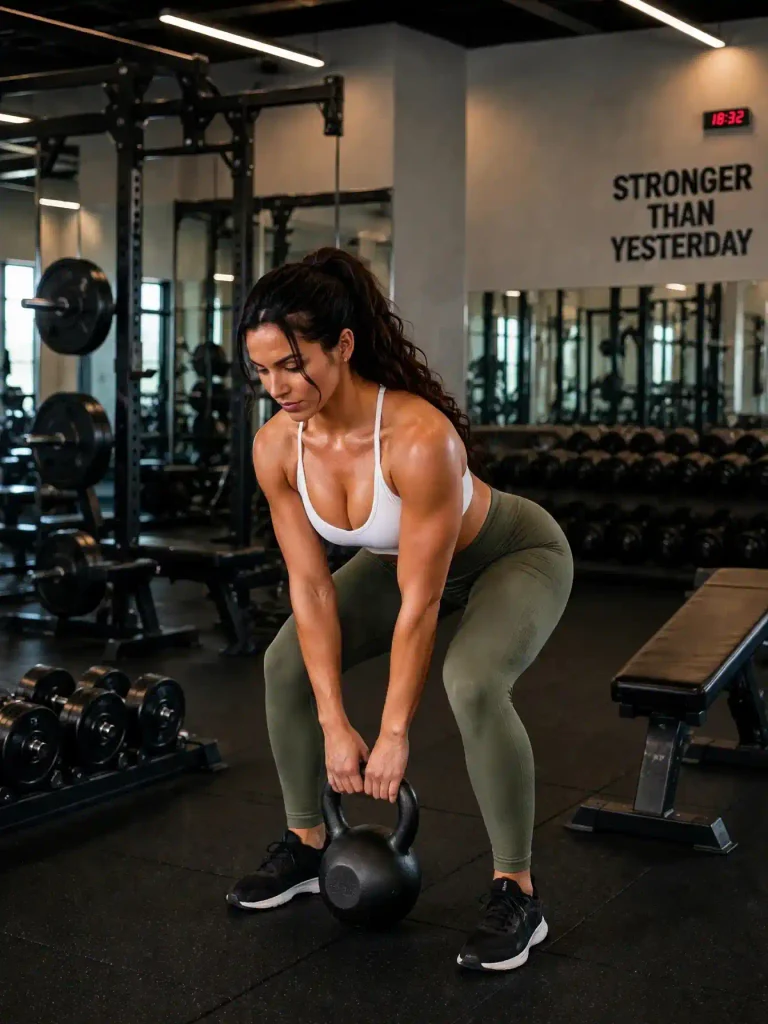
Kettlebell training can be a practical way to introduce strength exercises into your fitness routine. With seven basic movements, you can work several major muscle groups without needing a complicated setup.
Start with goblet squats, deadlifts, rows, and other controlled exercises. Choose a manageable weight, take your time learning the movements, and allow enough recovery between sessions.
The most useful beginner workout is one that feels manageable, supports good technique, and fits comfortably into your everyday routine.


Comments are closed.
[…] HRV is influenced by several factors, including sleep, stress, physical activity, and individual differences. […]