
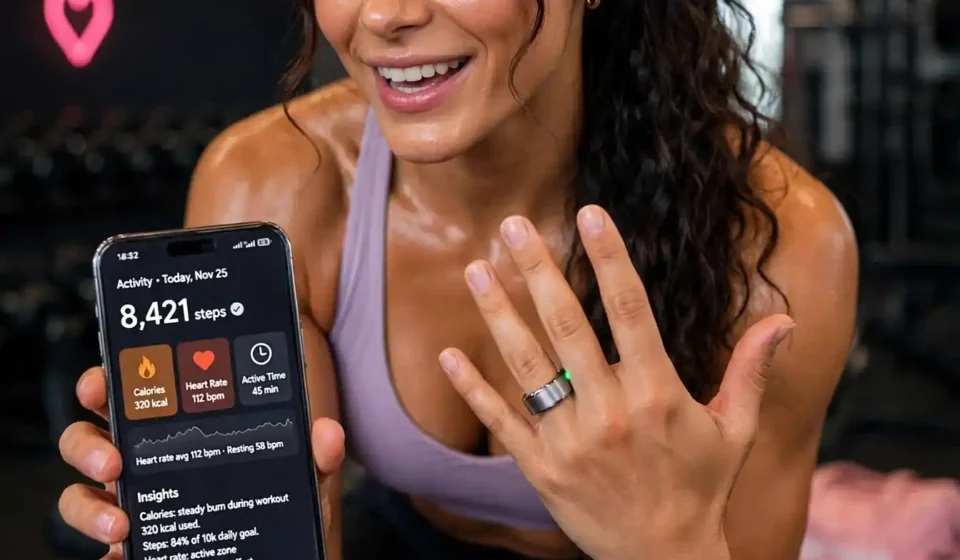

Wearable fitness technology is becoming more convenient, and smart rings are one of the devices attracting attention. Unlike traditional fitness watches, smart rings are small, lightweight devices worn on your finger that can collect information about your daily activity, sleep, heart rate, and recovery.
But what do all those numbers actually mean? Is a high activity score always a good sign? What does a recovery score tell you? And how can you use smart ring data to make better decisions about your fitness routine?
Smart Ring Fitness Tracking: What Your Activity and Recovery Data Mean Whether you are considering buying your first smart ring or already use one, understanding the information it collects can help you get more value from your device.
In this beginner’s guide, we explain the main smart ring fitness tracking features, how activity and recovery measurements work, and how to interpret your results without becoming too focused on daily scores.
What Is a Smart Ring?
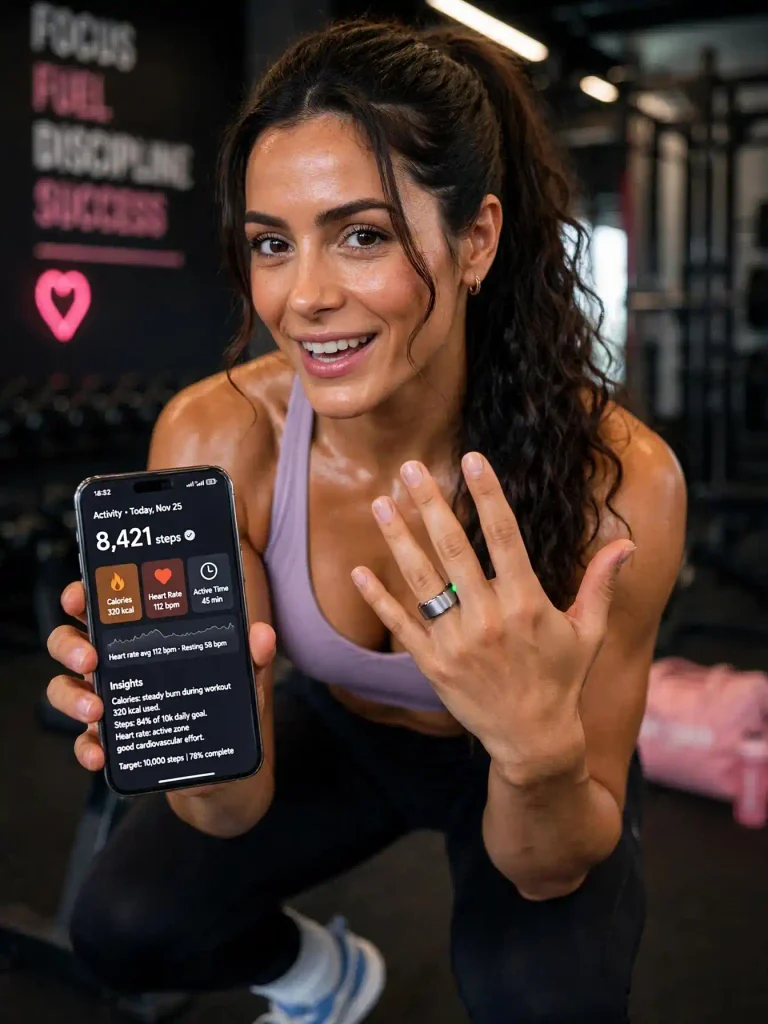
A smart ring is a wearable electronic device designed to collect health and activity-related information throughout the day and night.
It usually contains small sensors that measure signals such as heart rate, skin temperature changes, and movement. The collected information is then processed by a connected smartphone app.
Depending on the model, a smart ring may track:
- Daily steps and movement
- Estimated calorie expenditure
- Heart rate
- Resting heart rate
- Heart rate variability (HRV)
- Sleep duration and patterns
- Skin temperature changes
- Breathing rate during sleep
- Activity and recovery trends
Different brands offer different features, so not every smart ring measures the same information.
How Does Smart Ring Fitness Tracking Work?
Smart rings use miniature sensors to collect information from your finger.
Optical sensors commonly use light to estimate changes in blood volume beneath the skin. These changes can help estimate heart rate. Other sensors detect movement, while temperature sensors monitor changes in skin temperature.
The device sends information to a smartphone app, where algorithms organize the measurements into understandable reports and scores.
For example, your app might display:
- An activity score
- A sleep score
- A recovery or readiness score
- Daily movement information
- Heart rate trends
These scores are estimates created by the device’s software. They are useful for noticing patterns, but they should not be treated as medical diagnoses or exact measurements of your fitness.
7 Important Smart Ring Fitness Metrics Explained
Understanding the main measurements is the first step toward using your smart ring effectively.
1. Daily Activity Score
An activity score summarizes how active you have been during the day.
Depending on the device, it may consider steps, movement, exercise sessions, inactive periods, and activity intensity.
A higher score generally means that you met more of the activity goals set by the app.
How to use it:
Look at your activity over several days rather than worrying about one low-scoring day. Notice whether you are regularly moving throughout the day and whether your routine includes activities you enjoy.
A lower score does not mean you have failed. Rest days and quieter days are normal parts of an active lifestyle.
2. Daily Steps
Step tracking estimates how many steps you take throughout the day.
This measurement can help you understand your general movement habits, especially if you spend long periods sitting.
How to use it:
- Notice your usual daily movement patterns.
- Look for opportunities to take comfortable walking breaks.
- Compare weekly trends instead of focusing on a single day.
- Remember that step counts can vary between devices.
Step counts are estimates, and some activities may not be detected accurately.
3. Resting Heart Rate
Resting heart rate is the number of times your heart beats per minute while you are resting.
Many smart rings estimate this measurement during periods of rest or sleep.
Your resting heart rate can vary naturally depending on activity, sleep, stress, illness, hydration, and other factors.
How to use it:
Pay attention to longer-term patterns instead of reacting to a single reading. If you notice an unusual or persistent change and feel unwell, consider speaking with a healthcare professional.
A lower number is not automatically better for everyone.
4. Heart Rate Variability (HRV)
Heart rate variability, commonly called HRV, refers to the variation in time between consecutive heartbeats.
Smart rings may use overnight HRV measurements as one part of their recovery or readiness calculations.
HRV is influenced by several factors, including sleep, stress, physical activity, and individual differences.
How to use it:
Compare your readings with your own usual pattern rather than comparing them with friends or other users.
An occasional change is normal. A single HRV score cannot tell you exactly how recovered you are or whether you should exercise.
5. Sleep Tracking
Sleep tracking is one of the features that makes smart rings popular.
Depending on the model, your device may estimate:
- Total sleep duration
- Time spent in different sleep stages
- Sleep timing
- Nighttime movement
- Sleep consistency
- Overnight heart rate
These measurements can help you understand your general sleep habits.
However, consumer smart rings estimate sleep stages using sensor data and algorithms. They do not measure sleep in the same way as a clinical sleep study.
How to use it:
Look for patterns in your sleep schedule. Notice whether your bedtime changes frequently and whether you generally get enough sleep for your age and individual needs.
Do not let one unusual sleep score create unnecessary worry.
6. Skin Temperature Changes
Some smart rings measure changes in skin temperature during sleep.
These readings are generally more useful for tracking changes relative to your own baseline than for measuring your exact body temperature.
Temperature changes may be influenced by:
- Room temperature
- Sleep environment
- Physical activity
- Illness
- Hormonal changes
- Other individual factors
How to use it:
Look at temperature trends alongside other information, such as sleep and how you feel. A smart ring cannot diagnose an illness based on a temperature variation.
7. Recovery or Readiness Score
Many smart ring apps combine several measurements to create a recovery or readiness score.
Depending on the brand, the calculation may include:
- Resting heart rate
- HRV
- Sleep duration
- Sleep quality estimates
- Recent activity
- Temperature trends
A higher score may suggest that your recent measurements are closer to your usual baseline.
A lower score may indicate that your body is experiencing changes that could be associated with demanding activity, disrupted sleep, or other factors.
How to use it:
Treat the score as one piece of information. If you feel tired, consider a lighter activity or rest. If you feel comfortable and energized, you can use your usual routine as a guide rather than following the score blindly.
What Do Smart Ring Activity and Recovery Scores Mean?
Activity and recovery scores answer different questions.
| Measurement | What it tells you |
|---|---|
| Activity score | How much movement and activity you completed |
| Sleep score | An estimate of your recent sleep patterns |
| Resting heart rate | Your heart rate during rest |
| HRV | Variation in the time between heartbeats |
| Temperature trend | Changes in skin temperature relative to your baseline |
| Recovery score | An estimate based on several activity and recovery measurements |
For example, you might have a high activity score after a busy day but a lower recovery score the following morning.
This does not necessarily mean something is wrong. It simply shows that activity and recovery represent different aspects of your routine.
How to Use Smart Ring Data to Improve Your Fitness Routine
A smart ring can be useful when you use it to understand patterns rather than chase perfect scores.
Here are five practical ways to make the most of your data.
1. Establish Your Personal Baseline
Wear your device consistently according to the manufacturer’s instructions and give it time to collect enough information.
Your personal baseline helps you understand what is typical for you.
2. Track Your Weekly Activity
Instead of focusing on one daily score, review your activity over a full week.
Look for patterns in walking, exercise, and inactive periods. This can help you identify whether your routine is balanced.
3. Use Recovery Information Alongside How You Feel
A readiness score can provide useful context, but it cannot replace your own judgment.
Consider your energy, mood, comfort, and general well-being before deciding how demanding an activity should be.

4. Notice Your Sleep Habits
Review your bedtime, wake-up time, and estimated sleep duration.
If your schedule changes frequently, a consistent bedtime routine may help you develop more regular sleep habits.
5. Avoid Checking Scores Constantly
It is easy to become distracted by daily numbers.
Try reviewing your trends at a consistent time instead of checking the app repeatedly. The purpose of tracking is to support healthy habits, not create pressure.
Smart Ring vs Smartwatch: Which Is Better for Fitness Tracking?
Smart rings and smartwatches both offer activity-tracking features, but they are designed with different priorities.
| Feature | Smart Ring | Smartwatch |
|---|---|---|
| Design | Small and lightweight | Larger wrist-worn device |
| Daily activity | Available on many models | Available on many models |
| Sleep tracking | Common feature | Available on many models |
| Heart rate | Available on many models | Available on many models |
| Workout display | Usually limited | Often more detailed |
| GPS | Usually depends on a connected phone or is unavailable | Available on selected models |
| Notifications | Usually limited | Common feature |
| Screen | Usually no display | Built-in display |
Choose a smart ring if: You prefer a compact device and are particularly interested in sleep, daily activity, and longer-term trends.
Choose a smartwatch if: You want to view workout information directly on your wrist, use exercise apps, or access additional features such as GPS and notifications.
Neither option is automatically better. The right device depends on which features you actually plan to use.
Are Smart Ring Fitness Trackers Accurate?
Smart rings can provide useful estimates, but accuracy varies depending on the measurement, device, fit, and activity.
For example:
- Heart rate readings may be more consistent during rest than during some intense movements.
- Movement tracking may miss or miscount certain activities.
- Sleep stages are algorithm-based estimates.
- Skin temperature readings are affected by environmental conditions.
- Calorie expenditure is an estimate rather than a direct measurement.
A properly fitted ring can help improve sensor performance, but no consumer wearable provides perfectly accurate information in every situation.
If you need medical measurements or have concerns about your health, use appropriate medical equipment and professional advice rather than relying on a smart ring.
Common Mistakes to Avoid When Using a Smart Ring
Treating Every Score as a Health Diagnosis
Smart ring scores are not medical diagnoses. They summarize estimated data and should be interpreted carefully.
Comparing Your Results With Other People
Your measurements are personal. Differences between users do not automatically indicate differences in health or fitness.
Ignoring How You Feel
A high recovery score does not mean you must exercise, and a low score does not automatically mean you are unwell.
Expecting Perfect Workout Tracking
Some smart rings are better suited to everyday activity and sleep tracking than detailed exercise monitoring.
Becoming Too Focused on Daily Numbers
One unusual reading is rarely enough to establish a meaningful trend. Look at the bigger picture.
Frequently Asked Questions
What does a smart ring track during the day?
Depending on the model, a smart ring can track steps, movement, heart rate, activity estimates, and other wellness measurements.
What does recovery mean on a smart ring?
Recovery generally refers to an app-generated estimate based on measurements such as sleep, resting heart rate, HRV, and recent activity. The exact calculation varies by brand.
Can a smart ring track workouts?
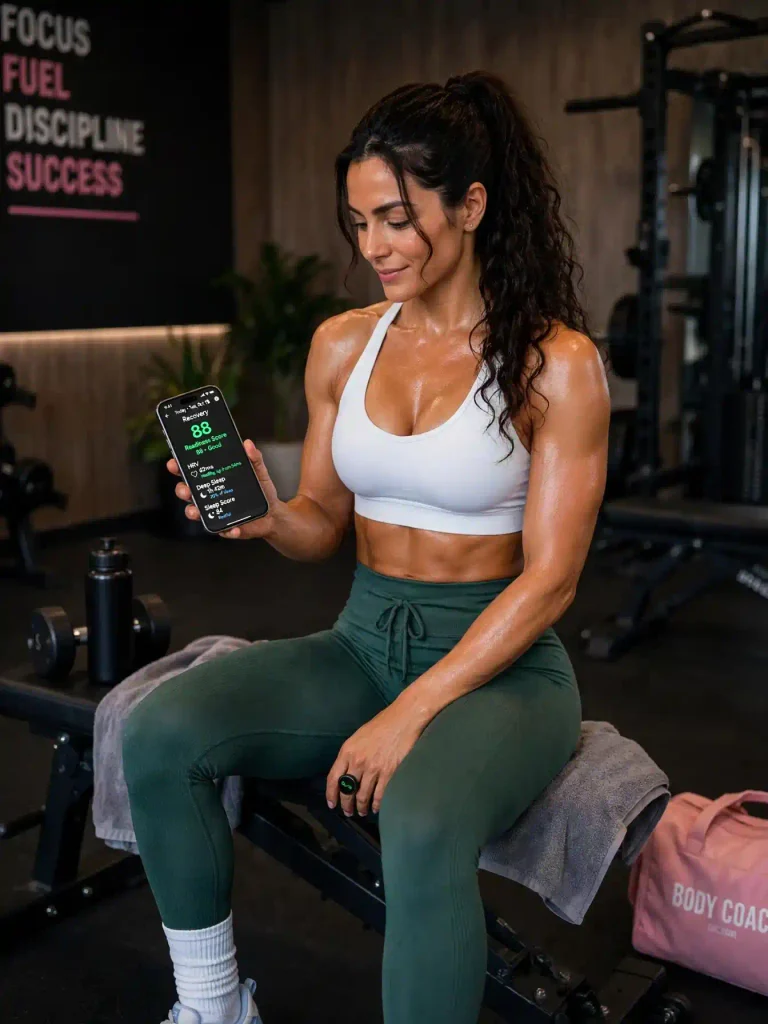
Many smart rings can recognize or record certain activities, but their workout features vary. Some offer less detailed real-time exercise information than smartwatches.
Is a smart ring better than a fitness watch?
Not necessarily. Smart rings are compact and convenient for continuous wear, while smartwatches often provide more detailed workout displays and additional features.
Do smart rings track sleep accurately?
They can provide useful estimates of sleep duration and patterns, but sleep stages are not measured with the same accuracy as a clinical sleep study.
Should I change my workout based on my recovery score?
Use the score as one source of information, not a strict instruction. Consider your energy, comfort, recent activity, and recovery needs before choosing your exercise intensity.
Do I need a smart ring to improve my fitness?
No. A smart ring is optional. You can build healthy activity habits through walking, strength training, enjoyable movement, and consistent sleep without purchasing a wearable device.
Final Thoughts
Smart ring fitness tracking can make it easier to understand your daily activity, sleep patterns, and recovery trends.
Measurements such as steps, resting heart rate, HRV, and readiness scores provide useful information, but they are estimates rather than perfect measurements of your health.
The best approach is to use your smart ring as a guide. Focus on longer-term patterns, listen to how you feel, and build a fitness routine that includes enjoyable movement and enough recovery.
Remember, the goal of fitness technology is to support your habits, not let daily scores control them.



Comments are closed.
[…] In this guide, you’ll discover what active recovery means, its potential benefits, the best activities to try, and how to create a simple rest-day routine that fits your lifestyle. […]