
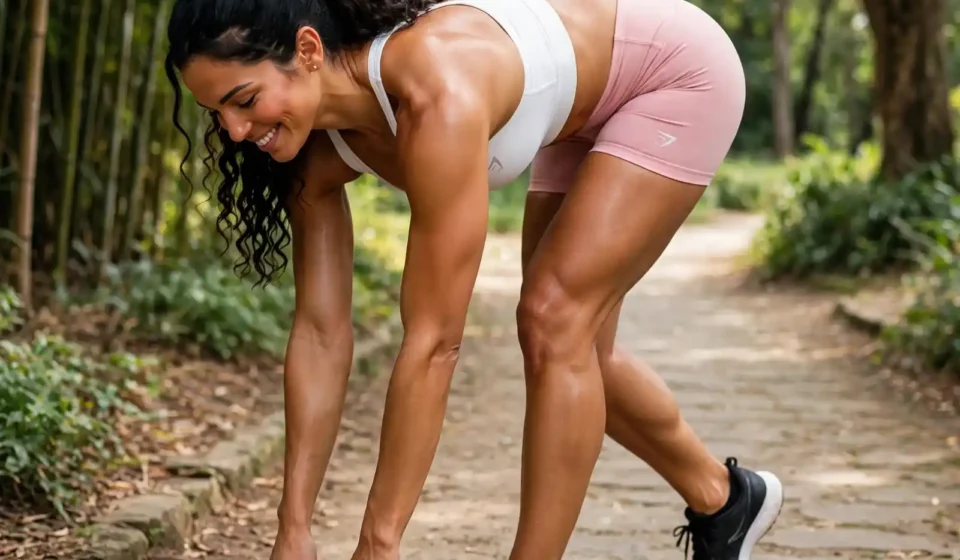

If you enjoy walking but want to make your daily routine more relaxing and mindful, walking yoga could be an interesting activity to try. It combines gentle walking with yoga-inspired movements, breathing exercises, and moments of mindfulness.
Walking Yoga: What It Is and How to Get Started Unlike a traditional yoga session that usually takes place on a mat, walking yoga allows you to practice gentle movement while exploring your surroundings. You can do it in a park, garden, quiet outdoor path, or even around your neighborhood.
Walking yoga doesn’t require expensive equipment or advanced fitness skills. It’s a flexible activity that can help you slow down, become more aware of your body, and bring a little more movement into your day.
In this beginner’s guide, you’ll discover what walking yoga is, its potential benefits, how to practice it, and a simple routine you can follow.
What Is Walking Yoga?
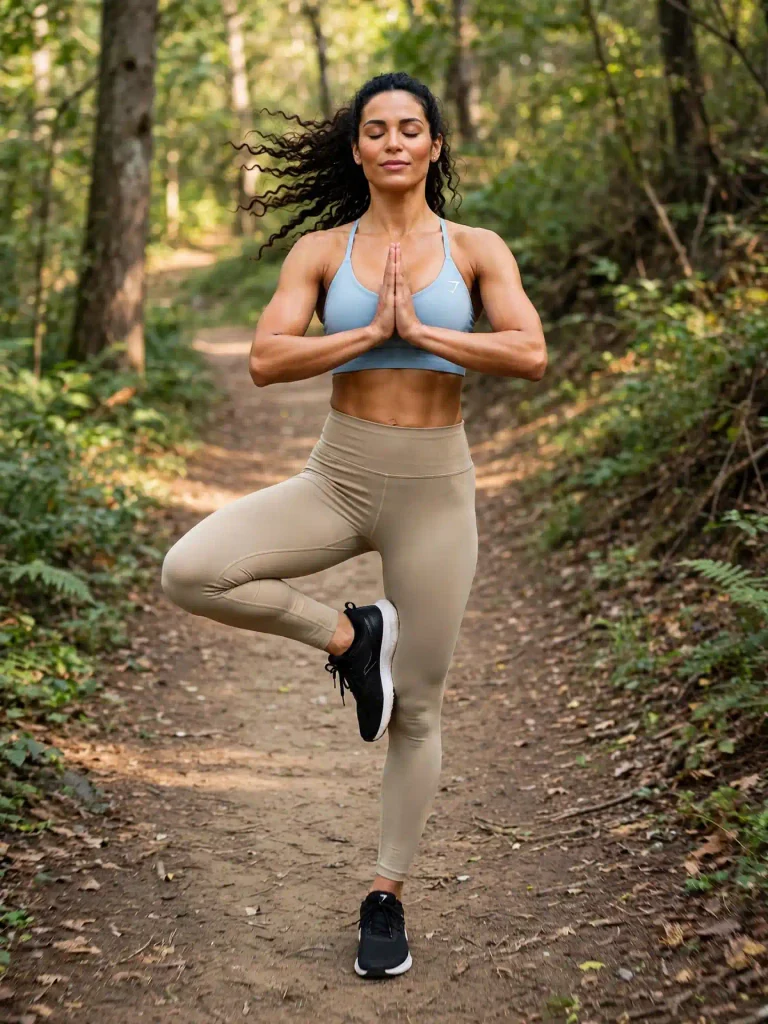
Walking yoga is a combination of walking, mindful breathing, gentle movements, and yoga-inspired techniques.
The goal isn’t simply to walk from one place to another. Instead, you focus on how your body moves, how your feet connect with the ground, and how your breathing changes as you walk.
Some walking yoga routines include gentle stretches or standing yoga poses during short breaks. Others focus mainly on mindful walking and breathing.
Unlike traditional yoga, walking yoga doesn’t require you to perform complicated poses or hold challenging positions.
It’s an accessible way to combine light physical activity with mindfulness.
Benefits of Walking Yoga
Walking yoga combines two activities that can support physical and mental well-being. Here are some potential benefits of adding it to your routine.
1. Encourages Mindful Movement
One of the main ideas behind walking yoga is paying attention to the present moment.
Instead of thinking about your daily responsibilities or rushing to reach your destination, you focus on your steps, breathing, and surroundings.
This can make an ordinary walk feel more relaxing and intentional.
2. Supports General Fitness
Walking is a simple form of physical activity that helps you stay active throughout the day.
Adding gentle yoga-inspired movements can introduce variety and encourage you to move your body in different ways.
Regular physical activity can also support cardiovascular health and general fitness.
3. Helps You Practice Better Breathing Awareness
Breathing is an important part of many yoga practices.
During walking yoga, you can pay attention to your natural breathing rhythm and try to keep your breathing relaxed and comfortable.
For example, you might breathe naturally for several steps, then continue walking without forcing your breathing into a particular pattern.
4. Supports Mobility and Flexibility
Gentle movements and stretches can help you explore comfortable ranges of motion in your shoulders, hips, ankles, and spine.
Adding simple mobility exercises before or after walking can make your routine more varied.
5. Provides an Opportunity to Relax
Spending time outdoors and focusing on gentle movement can provide a welcome break from a busy day.
A quiet walking route, comfortable pace, and a few moments of mindful breathing can help create a more peaceful exercise experience.
6. Makes Exercise More Enjoyable
Not everyone enjoys traditional gym workouts or structured exercise sessions.
Walking yoga offers a flexible alternative that combines movement, breathing, and time outdoors.
You can adjust the pace and duration according to your preferences.
How to Get Started With Walking Yoga
You don’t need previous yoga experience to begin. Start with simple movements and focus on feeling comfortable throughout the session.
Step 1: Choose a Comfortable Location
Find a quiet, safe place where you can walk without constantly stopping or worrying about traffic.
Good options include:
- A local park.
- A garden or outdoor walking path.
- A quiet neighborhood street.
- A suitable indoor walking space.
Choose a relatively flat surface when you’re learning the basic movements.
Step 2: Wear Comfortable Clothing and Shoes
Choose clothing that allows you to move freely.
Comfortable walking shoes are helpful, especially if your route includes different surfaces.
You don’t need special yoga clothing or equipment to practice walking yoga.
Step 3: Begin With Slow Walking
Start with five minutes of relaxed walking.
Pay attention to how your feet touch the ground and how your arms move naturally.
Keep your shoulders relaxed and look ahead rather than constantly looking down.
Step 4: Focus on Your Breathing
As you continue walking, become aware of your natural breathing rhythm.
Try to avoid holding your breath or forcing yourself to breathe at a specific speed.
If it feels comfortable, notice how your breathing changes when you walk slightly faster or slower.
Step 5: Add Gentle Yoga Movements
After several minutes of walking, pause somewhere safe and try a few gentle movements.
You can include shoulder rolls, standing side stretches, gentle torso rotations, or ankle circles.
Move slowly and stay within a comfortable range of motion.
Step 6: Finish With Relaxed Walking
End your session with a few minutes of easy walking.
Allow your breathing to return to its normal rhythm and take a moment to notice how you feel.
6 Simple Walking Yoga Exercises for Beginners
You can add these gentle movements to your walking routine. Perform them while standing in a safe place rather than trying to balance during movement.
1. Mindful Walking
<AsyncImage query=”woman practicing mindful walking in peaceful green park yoga wellness” aspectRatio=”16:9″ width=”100%”/>
Mindful walking is the foundation of walking yoga.
How to do it:
- Stand comfortably with your feet on the ground.
- Begin walking at a relaxed pace.
- Pay attention to each step.
- Notice the movement of your legs and arms.
- Keep your breathing natural.
Suggested duration: 3–5 minutes.
2. Shoulder Rolls
<AsyncImage query=”woman doing standing shoulder rolls gentle yoga exercise outdoors” aspectRatio=”16:9″ width=”100%”/>
Shoulder rolls are a simple way to introduce gentle upper-body movement.
How to do it:
- Stand upright with your arms relaxed.
- Slowly lift your shoulders toward your ears.
- Roll them backward and down.
- Repeat several times.
- Change direction if comfortable.
Suggested repetitions: 8–10 rolls.
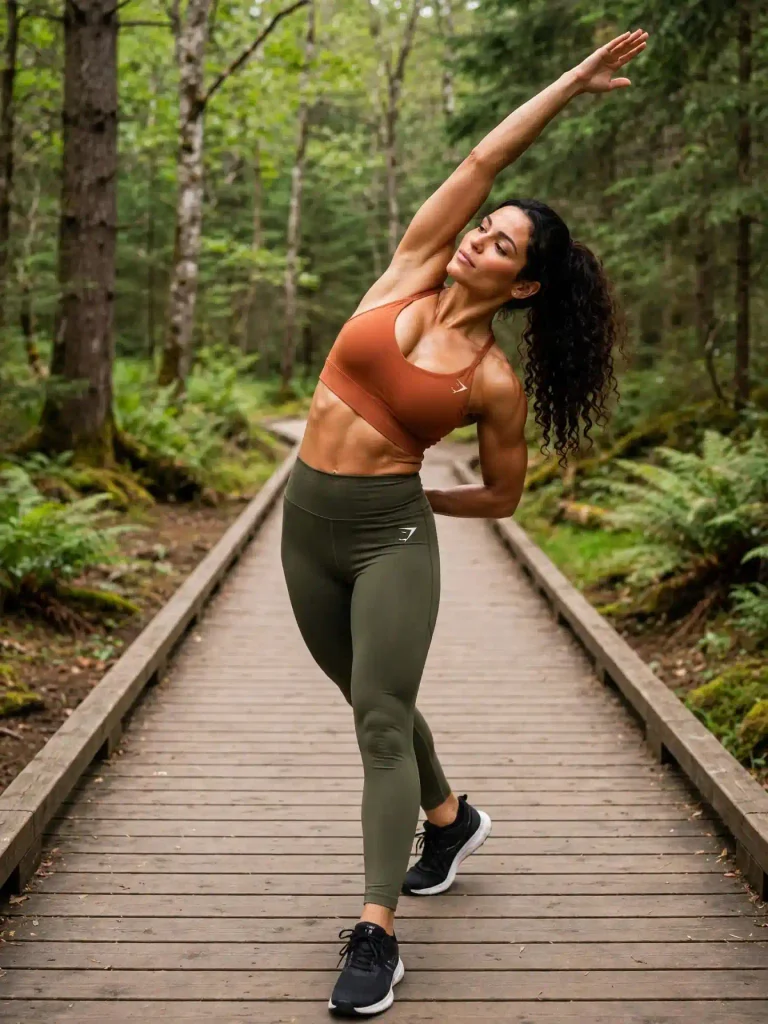
3. Standing Side Stretch
<AsyncImage query=”woman performing standing side stretch yoga pose outdoors park” aspectRatio=”16:9″ width=”100%”/>
This movement gently stretches the sides of your torso.
How to do it:
- Stand with your feet comfortably apart.
- Raise one arm overhead.
- Gently lean toward the opposite side.
- Keep both feet grounded.
- Return to the center and switch sides.
Suggested repetitions: 3–5 per side.
4. Standing Cat-Cow Movement
<AsyncImage query=”woman performing standing cat cow yoga stretch hands on thighs outdoors” aspectRatio=”16:9″ width=”100%”/>
This standing variation brings gentle movement to your spine.
How to do it:
- Stand with your feet hip-width apart.
- Place your hands gently on your thighs.
- Slowly round your upper back.
- Return to a neutral position and gently lift your chest.
- Repeat without forcing the movement.
Suggested repetitions: 6–8 times.
5. Standing Knee Raises
<AsyncImage query=”woman performing standing alternating knee raises balance exercise outdoors” aspectRatio=”16:9″ width=”100%”/>
Standing knee raises introduce gentle movement for your hips and legs.
How to do it:
- Stand upright near a stable support if needed.
- Slowly lift one knee to a comfortable height.
- Lower your foot gently.
- Repeat with the other leg.
- Keep your upper body steady.
Suggested repetitions: 8–10 per leg.
6. Ankle Circles
<AsyncImage query=”woman performing standing ankle mobility circles holding park railing yoga” aspectRatio=”16:9″ width=”100%”/>
Ankle circles are a simple mobility exercise that can be included before or after your walk.
How to do it:
- Stand near a stable support.
- Shift your weight comfortably onto one leg.
- Lift the opposite foot slightly.
- Make small, controlled circles with your ankle.
- Change direction and switch feet.
Suggested repetitions: 8 circles in each direction per ankle.
A Simple 20-Minute Walking Yoga Routine
If you’re new to walking yoga, try this beginner-friendly routine.
| Time | Activity |
|---|---|
| 0–5 minutes | Relaxed mindful walking |
| 5–7 minutes | Shoulder rolls and natural breathing |
| 7–9 minutes | Standing side stretches |
| 9–11 minutes | Standing cat-cow movements |
| 11–13 minutes | Standing knee raises |
| 13–15 minutes | Ankle circles |
| 15–20 minutes | Slow, relaxed walking |
You can shorten or extend the routine depending on your comfort level.
The movements should feel gentle and controlled. If an exercise causes discomfort, stop or choose a more comfortable variation.
How Often Should You Practice Walking Yoga?
If you’re a beginner, two or three sessions per week can be a good starting point.
You can gradually increase your practice as you become more comfortable with the movements.
A simple weekly schedule might look like this:
- Monday: 20-minute walking yoga session.
- Tuesday: Easy walk or rest.
- Wednesday: 20-minute walking yoga session.
- Thursday: Gentle stretching or mobility.
- Friday: Rest or relaxed walking.
- Saturday: Walking yoga session.
- Sunday: Rest.
You don’t have to follow this schedule exactly. Choose a frequency that fits your lifestyle and allows you to recover comfortably.
Walking Yoga vs. Traditional Yoga
Both practices include mindful movement and body awareness, but they are not exactly the same.
| Feature | Walking Yoga | Traditional Yoga |
|---|---|---|
| Main activity | Walking and gentle movements | Yoga poses and sequences |
| Location | Outdoors or indoors | Usually on a mat |
| Equipment | Comfortable shoes | Often a yoga mat |
| Movement | Mostly continuous walking | A variety of standing, seated, and floor poses |
| Intensity | Usually gentle | Depends on the yoga style |
| Main focus | Mindful walking and movement | Movement, breathing, balance, and flexibility |
You can also combine both practices throughout the week if you enjoy them.
Common Walking Yoga Mistakes to Avoid
Walking Too Quickly
Walking yoga is generally about mindful movement rather than speed. Choose a pace that allows you to stay relaxed and aware of your surroundings.
Forcing Your Breathing
You don’t need to match every breath to a specific number of steps. Let your breathing remain natural and comfortable.
Trying Difficult Yoga Poses
Beginners should focus on simple movements rather than complicated poses. Use a stable support when practicing balance exercises.
Ignoring Your Surroundings
When walking outdoors, pay attention to the path, other people, and potential obstacles. Safety is more important than maintaining your concentration on a yoga technique.
Skipping Recovery
Even gentle activities can feel tiring if you’re not used to regular exercise. Take breaks whenever needed and gradually build your routine.
Tips for Making Walking Yoga a Habit
Building a consistent routine is easier when you keep things simple.
- Choose a walking location you enjoy.
- Start with short sessions.
- Practice at a time that fits your daily schedule.
- Wear comfortable clothing and shoes.
- Focus on natural breathing rather than perfect technique.
- Try different routes to keep your walks interesting.
- Avoid comparing your practice with other people’s routines.
You don’t need to make every session perfect. The goal is to enjoy the movement and create a routine you can maintain.
Final Thoughts
Walking yoga is a simple way to combine walking, mindful breathing, and gentle yoga-inspired movements.
It’s suitable for people who want a relaxed approach to staying active without needing complicated equipment or advanced yoga skills.
Start with a short walk, add a few comfortable movements, and finish with relaxed breathing. As you become more familiar with the routine, you can adjust the duration and frequency to suit your needs.
Most importantly, keep your practice comfortable and enjoyable. A simple routine that fits naturally into your day can be a great way to stay active and mindful.


Comments are closed.
[…] you’re new to this type of exercise, a few simple habits can make your sessions more comfortable and […]