
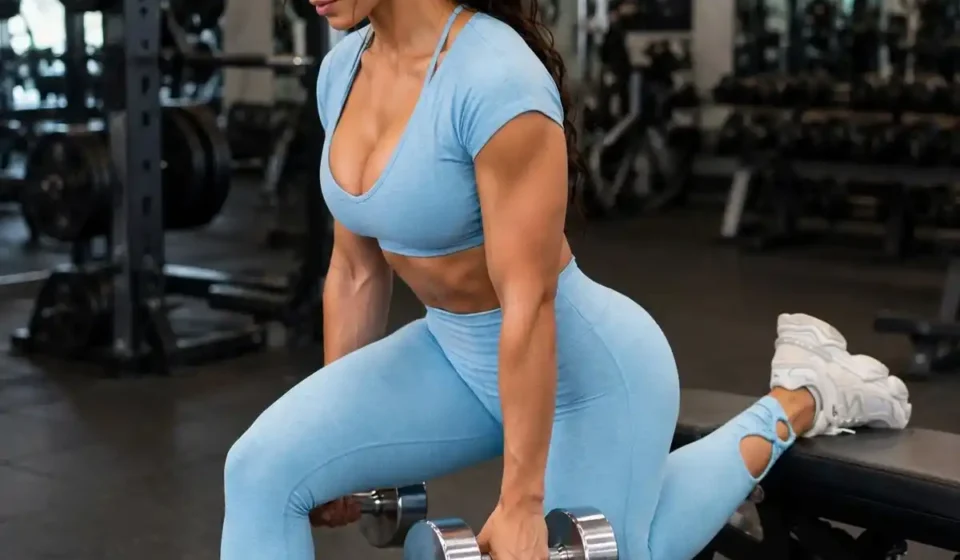

15 Glute Exercises for Women to Build Strength and Improve Fitness glutes play an important role in everyday movement, balance, and overall fitness. Whether you’re working out at the gym, exercising at home, or simply looking for ways to become more active, adding glute exercises to your routine can be a great way to improve your strength.
The glutes are involved in many movements, including walking, climbing stairs, running, and standing up. Strengthening these muscles can also help support your hips and improve your stability.
The good news is that you don’t need complicated equipment or an advanced training routine to get started. Many effective glute exercises can be performed using just your body weight, while others can be made more challenging with dumbbells, resistance bands, or gym machines.
In this guide, we’ll explore 15 glute exercises for women, explain how to perform them, and share practical tips for adapting your workouts to your experience and fitness level.
Whether you’re a beginner or already familiar with strength training, you’ll find plenty of exercises to help you build a balanced and enjoyable workout routine.
What Are the Glute Muscles?
The glutes are a group of three muscles located around your hips. Together, they help you move your legs, stabilize your pelvis, and support your body during everyday activities.
Here are the three main glute muscles.
1. Gluteus Maximus
The gluteus maximus is the largest of the three glute muscles. It plays an important role in extending your hips, which is essential for movements such as standing up, climbing stairs, and running.
Exercises such as glute bridges, hip thrusts, and Romanian deadlifts involve this muscle.
2. Gluteus Medius
The gluteus medius is located on the outer side of your hips. It helps move your legs sideways and keeps your pelvis stable when you’re standing on one leg.
Exercises such as fire hydrants, single-leg deadlifts, and lateral leg raises can help strengthen this muscle.
3. Gluteus Minimus
The gluteus minimus is the smallest of the three muscles. It works alongside the gluteus medius to support hip movement and stability.
Although it’s smaller, it plays an important role in helping you maintain balance and control your movements.
Why does this matter?
Training different glute muscles can help you develop balanced lower-body strength. A varied workout that includes several movement patterns is a practical way to train them.
Why Is Glute Training Important?
Glute exercises are useful for more than just gym workouts. Strong glutes can support many activities you perform throughout the day.
Here are some of the main benefits of including glute exercises in your fitness routine.
1. Improve Lower-Body Strength
Your glutes are involved in many lower-body movements.
Exercises such as squats, lunges, and hip thrusts challenge these muscles and help you develop strength over time.
This strength can be useful for everyday activities, including climbing stairs, carrying objects, and getting up from a chair.
2. Support Hip Stability
Your glute muscles help stabilize your hips and pelvis when you walk, run, or stand on one leg.
Exercises that involve balancing or moving one leg at a time can help you practise this type of stability.
3. Improve Athletic Performance
Glute strength is important in many sports and physical activities.
Running, jumping, cycling, and climbing all involve the muscles around your hips.
Including appropriate strength exercises in your routine can help you develop the strength and coordination needed for these activities.
4. Support Everyday Movement
You use your glutes more often than you might realize.
Getting out of a chair, walking uphill, and lifting objects from the floor all involve your lower-body muscles.
Regular strength training can help make these movements more manageable.
How to Prepare for a Glute Workout
Before starting your workout, take a few minutes to prepare your body.
A proper warm-up helps you gradually increase your activity level and practise the movements you’ll use during your session.
You can begin with five minutes of light walking, cycling, or another comfortable activity.
After that, try a few dynamic movements, such as:
- Gentle leg swings
- Bodyweight squats
- Walking lunges
- Hip circles
- Glute bridges
You don’t need to perform every exercise. Choose a few movements that feel comfortable and help you prepare for your workout.
If you’re new to strength training, begin with bodyweight exercises before adding resistance.
15 Best Glute Exercises for Women
The following exercises offer different ways to strengthen your glutes. Some are suitable for beginners, while others require more balance, coordination, or experience.
You don’t need to perform all 15 exercises in one session. Choose a few that suit your fitness level and combine them into a balanced routine.
1. Glute Bridge
Equipment: Exercise mat (optional)
Difficulty: Beginner
Main muscles: Gluteus maximus
The glute bridge is a simple exercise that you can perform almost anywhere. It works your glutes and also involves your core and the muscles around your hips.
It’s a useful starting point if you’re learning lower-body strength exercises.
How to perform a glute bridge:
- Lie on your back with your knees bent and your feet flat on the floor.
- Place your feet approximately hip-width apart.
- Keep your arms relaxed beside your body.
- Gently tighten your core and lift your hips.
- Pause briefly at the top without arching your lower back.
- Slowly lower your hips to the floor.
Start with a comfortable number of repetitions and focus on controlled movement.
Beginner tip: If lifting your hips feels difficult, begin with a smaller movement and gradually increase it as you become more comfortable.
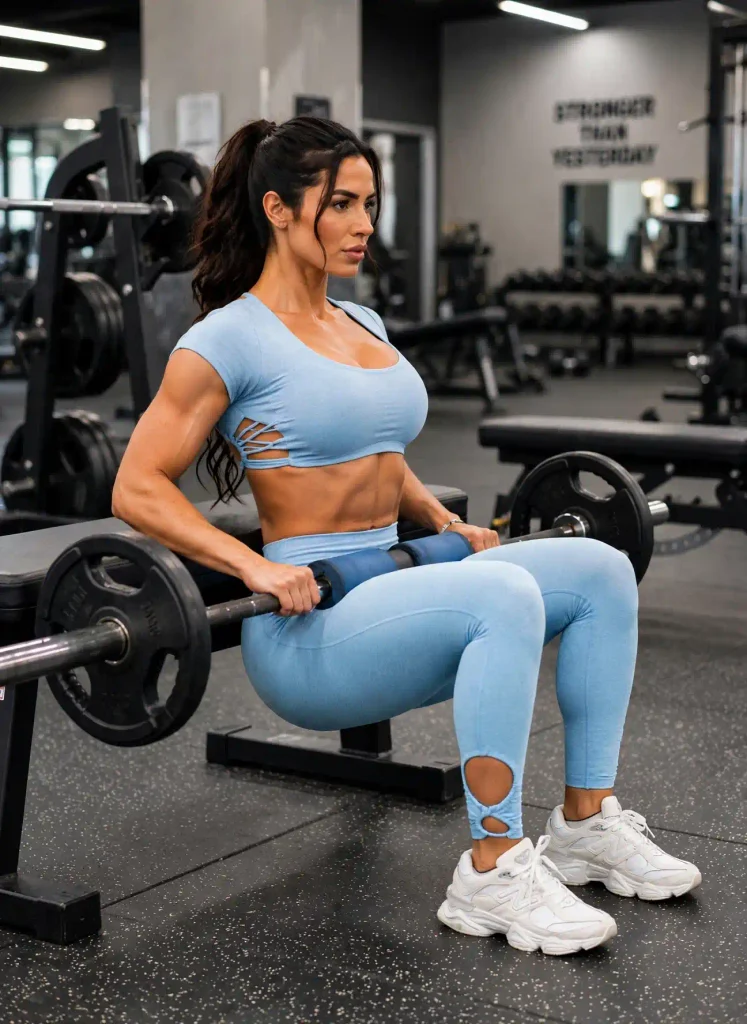
2. Hip Thrust
Equipment: Bench and optional dumbbell or barbell
Difficulty: Intermediate
Main muscles: Gluteus maximus
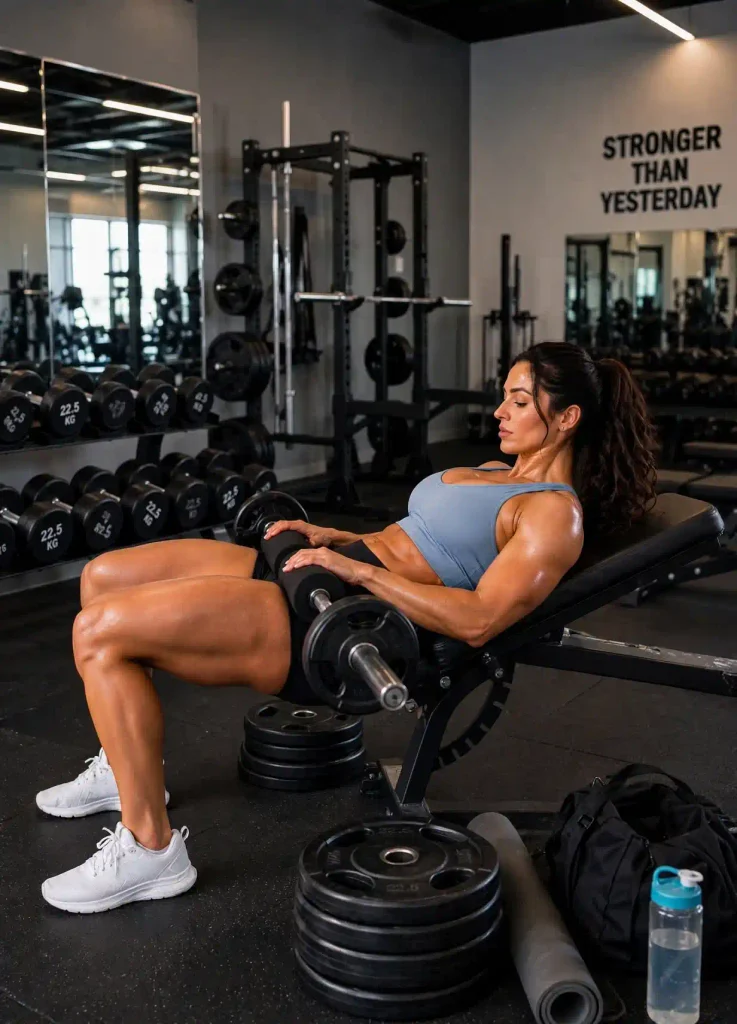
The hip thrust is a popular strength exercise that focuses on hip extension.
Unlike a glute bridge, this exercise uses a bench to support your upper back. You can begin without additional weight and add resistance when you’re comfortable with the movement.
How to perform a hip thrust:
- Sit on the floor with your upper back against a sturdy bench.
- Bend your knees and place your feet flat on the floor.
- Keep your feet approximately hip-width apart.
- Lift your hips until your torso is roughly parallel to the floor.
- Pause briefly while keeping your core engaged.
- Slowly lower your hips to the starting position.
Make sure the bench is stable before beginning.
Beginner tip: Practise the movement without weights first. Once you understand the technique, you can gradually introduce resistance if appropriate.
3. Forward Lunges
Equipment: None or optional dumbbells
Difficulty: Beginner to intermediate
Main muscles: Glutes and quadriceps
Forward lunges are a useful lower-body exercise that also challenge your balance and coordination.
They work one leg at a time, allowing you to practise controlling your movements on each side.
How to perform forward lunges:
- Stand upright with your feet comfortably apart.
- Take a step forward with one foot.
- Bend both knees and lower your body comfortably.
- Keep your front knee aligned with your foot.
- Push through your front foot to return to standing.
- Repeat with the other leg.
You can hold onto a stable surface for support if needed.
Beginner tip: Start with a short step and a comfortable range of motion. You can gradually increase the movement as your balance improves.
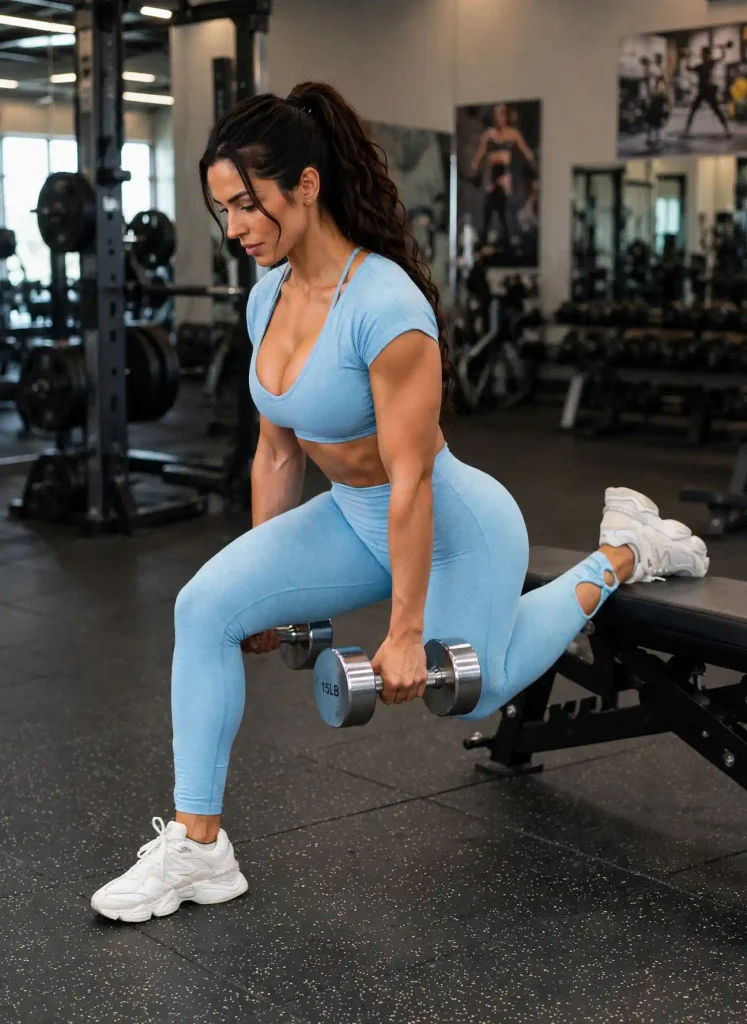
4. Bulgarian Split Squat
Equipment: Bench or sturdy elevated surface
Difficulty: Intermediate
Main muscles: Glutes and quadriceps
The Bulgarian split squat is a single-leg exercise that challenges your lower-body strength and balance.
It involves placing one foot behind you on an elevated surface while the other leg supports most of your movement.
How to perform a Bulgarian split squat:
- Stand in front of a sturdy bench.
- Place one foot behind you on the bench.
- Position your front foot far enough forward to feel balanced.
- Slowly bend your front knee and lower your body.
- Keep your upper body comfortable and stable.
- Push through your front foot to return to the starting position.
- Complete your repetitions and switch legs.
Beginner tip: This exercise can be challenging. Practise regular split squats with both feet on the floor before trying the elevated version.
5. Step-Ups
Equipment: Low, sturdy step or exercise platform
Difficulty: Beginner
Main muscles: Glutes and quadriceps
Step-ups are a practical exercise that closely resembles climbing stairs.
They work your lower-body muscles while also challenging your balance and coordination.
How to perform step-ups:
- Stand in front of a stable step.
- Place one foot firmly on the platform.
- Push through that foot to lift your body.
- Bring your other foot onto the platform.
- Step back down carefully.
- Repeat with the opposite leg.
Choose a platform height that allows you to move comfortably.
Beginner tip: Start with a low step and use a handrail or another stable support if you need help with balance.
6. Romanian Deadlift
Equipment: Dumbbells or barbell
Difficulty: Beginner to intermediate
Main muscles: Glutes and hamstrings
The Romanian deadlift is a strength exercise that focuses on the muscles at the back of your body.
It teaches you how to bend at your hips while keeping your back in a stable position.
How to perform a Romanian deadlift:
- Stand with your feet approximately hip-width apart.
- Hold a light dumbbell in each hand.
- Keep your knees slightly bent.
- Push your hips backward while lowering the weights along your legs.
- Stop when you feel a comfortable stretch in the back of your thighs.
- Push your hips forward to return to standing.
Keep the weights close to your body throughout the movement.
Beginner tip: Practise the hip-hinge movement without weights before adding dumbbells. If you’re unsure about your technique, ask a qualified trainer for help.
7. Kettlebell Swing
Equipment: Kettlebell
Difficulty: Intermediate
Main muscles: Glutes and hamstrings
The kettlebell swing is a dynamic exercise that combines strength and coordination.
Unlike a squat, the movement is mainly driven by your hips. It can be useful for people who have already learned the basic hip-hinge technique.
How to perform a kettlebell swing:
- Stand with your feet approximately shoulder-width apart.
- Place a kettlebell on the floor in front of you.
- Bend your hips and knees to pick it up safely.
- Hold the kettlebell with both hands.
- Push your hips backward and allow the kettlebell to move between your legs.
- Drive your hips forward to swing the kettlebell to approximately chest height.
- Allow it to swing back down naturally as you prepare for the next repetition.
Keep your back in a comfortable, stable position throughout the exercise.
Beginner tip: Learn the hip-hinge movement first. Kettlebell swings are not necessary for beginners, and you can develop lower-body strength with simpler exercises.
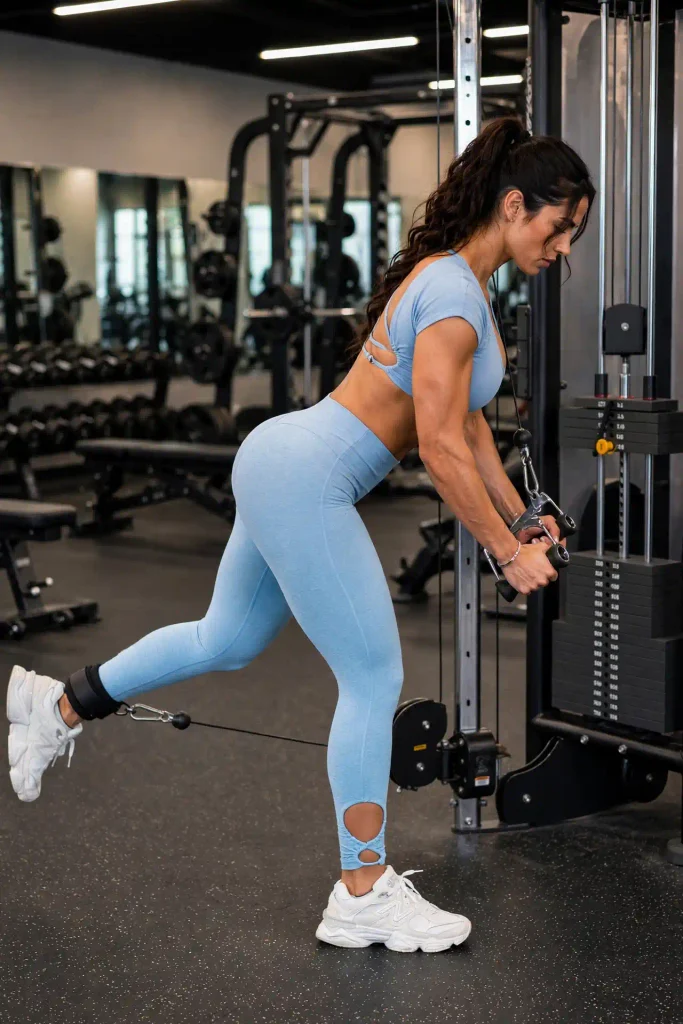
8. Standing Hip Extension
Equipment: None or resistance band
Difficulty: Beginner
Main muscles: Gluteus maximus
Standing hip extensions are a simple way to practise moving one leg backward while maintaining balance.
You can perform this exercise without equipment or add a resistance band when you’re comfortable.
How to perform standing hip extensions:
- Stand upright and hold a stable surface for support.
- Keep your feet comfortably apart.
- Slowly move one leg backward without arching your lower back.
- Pause briefly.
- Return your leg to the starting position.
- Repeat on the other side.
Keep your hips facing forward and avoid swinging your leg.
Beginner tip: Focus on a small, controlled movement rather than trying to lift your leg as high as possible.
9. Sumo Squat
Equipment: None or optional dumbbell
Difficulty: Beginner
Main muscles: Glutes, quadriceps, and inner thighs
The sumo squat is a variation of the traditional squat. It uses a wider stance and a slightly different foot position.
This exercise works several muscles in your lower body and can be performed with or without additional resistance.
How to perform a sumo squat:
- Stand with your feet wider than shoulder-width apart.
- Turn your toes slightly outward.
- Keep your chest comfortable and your back stable.
- Bend your knees and hips to lower into a squat.
- Lower only as far as you can comfortably manage.
- Push through your feet to return to standing.
Beginner tip: Adjust your stance until you find a position that feels natural and comfortable for your hips and knees.
10. Single-Leg Deadlift
Equipment: None or optional dumbbell
Difficulty: Intermediate
Main muscles: Glutes and hamstrings
The single-leg deadlift is a useful exercise for practising balance and strengthening the muscles around your hips.
Because it involves standing on one leg, it can be more challenging than a traditional Romanian deadlift.
How to perform a single-leg deadlift:
- Stand upright with your feet comfortably apart.
- Shift your weight onto one leg.
- Slowly bend forward at your hips.
- Extend your other leg backward as you lower your upper body.
- Keep your back in a comfortable, stable position.
- Return to standing using a controlled movement.
- Repeat on the other side.
You can hold a stable surface for support if necessary.
Beginner tip: Start without weights and keep the movement small. Balance and control are more important than how far you can bend.
11. Reverse Lunge
Equipment: None or optional dumbbells
Difficulty: Beginner
Main muscles: Glutes and quadriceps
Reverse lunges are similar to forward lunges, but you step backward instead of forward.
Some people find this variation easier to control because the front foot stays in place.
How to perform reverse lunges:
- Stand upright with your feet comfortably apart.
- Step backward with one foot.
- Bend both knees and lower your body.
- Keep your front foot flat and your knee aligned with your foot.
- Push through your front foot to return to standing.
- Repeat with the opposite leg.
Beginner tip: Hold onto a stable surface if you need additional balance. Start with a comfortable step length.
12. Walking Lunges
Equipment: None or optional dumbbells
Difficulty: Intermediate
Main muscles: Glutes and quadriceps
Walking lunges combine the traditional lunge with forward movement.
They can be a useful way to practise balance, coordination, and lower-body strength.
How to perform walking lunges:
- Stand upright with your feet comfortably apart.
- Take a step forward with one leg.
- Bend both knees and lower into a lunge.
- Push through your front foot to stand.
- Bring your back leg forward and step into the next lunge.
- Continue alternating legs.
Use a clear, unobstructed space so you can move safely.
Beginner tip: If walking lunges feel difficult, practise stationary lunges first.
13. Resistance Band Glute Kickbacks
Equipment: Resistance band (optional)
Difficulty: Beginner to intermediate
Main muscles: Gluteus maximus
Resistance band kickbacks are a variation of the traditional hip extension exercise.
The band adds resistance, making the movement more challenging.
How to perform resistance band kickbacks:
- Position yourself on your hands and knees.
- Place your hands beneath your shoulders and your knees beneath your hips.
- If using a resistance band, position it according to its instructions.
- Keep your core gently engaged.
- Extend one leg backward in a controlled movement.
- Return your knee to the starting position.
- Repeat on the other side.
Keep your hips stable and avoid arching your lower back.
Beginner tip: Start without a resistance band. Add one only when you can perform the movement comfortably.
14. Fire Hydrants
Equipment: Exercise mat (optional)
Difficulty: Beginner
Main muscles: Gluteus medius and other hip muscles
Fire hydrants are performed on your hands and knees. They involve lifting one leg sideways while keeping your knee bent.
The exercise helps you practise hip movement and stability.
How to perform fire hydrants:
- Start on your hands and knees.
- Keep your hands beneath your shoulders and your knees beneath your hips.
- Gently tighten your core.
- Lift one knee out to the side while keeping it bent.
- Pause briefly without rotating your entire body.
- Slowly lower your knee.
- Repeat on the other side.
Beginner tip: Use a small range of motion at first. Keep your hips as stable as possible throughout the exercise.
15. Donkey Kicks
Equipment: Exercise mat (optional)
Difficulty: Beginner
Main muscles: Gluteus maximus
Donkey kicks are a familiar bodyweight exercise that can easily be included in a home workout.
They involve extending one leg backward while keeping your body stable on your hands and knees.
How to perform donkey kicks:
- Start on your hands and knees.
- Place your hands beneath your shoulders and your knees beneath your hips.
- Keep your back in a natural position.
- Bend one knee and slowly lift your thigh backward.
- Stop when you can no longer lift your leg without moving your lower back.
- Slowly return your knee to the starting position.
- Repeat with the other leg.
Beginner tip: Focus on slow, controlled movements. You don’t need to lift your leg very high to practise the exercise.
How to Create a Balanced Glute Workout
You don’t need to include all 15 exercises in one workout. In fact, choosing a smaller selection can make your routine easier to follow.
Try combining exercises that involve different movements, such as hip extensions, squats, and single-leg exercises.
Here’s an example of a simple routine for someone who already feels comfortable with basic strength training.
| Exercise | Sets | Repetitions |
|---|---|---|
| Glute bridges | 2 | 10 |
| Bodyweight squats | 2 | 10 |
| Reverse lunges | 2 | 8 per leg |
| Romanian deadlifts | 2 | 10 |
| Fire hydrants | 2 | 10 per side |
Start with a comfortable level of difficulty. Rest between sets and stop if you experience pain or feel unwell.
Beginners can start with fewer exercises and gradually learn the movements before increasing the challenge.
How to Make Glute Exercises Easier or More Challenging
One of the advantages of strength training is that many exercises can be adjusted to suit different experience levels.
Here are a few ways to adapt your workouts.
Start With Bodyweight Exercises
If you’re new to strength training, bodyweight exercises are a practical starting point.
Glute bridges, squats, step-ups, and standing hip extensions allow you to practise basic movements without additional equipment.
Take your time learning the correct technique.
Use Resistance Bands
Resistance bands are lightweight and convenient. They can be used for exercises such as glute bridges, kickbacks, and other hip movements.
Different bands offer different levels of resistance, so choose one that allows you to move comfortably.
Make sure your band is in good condition and follow its instructions.
Add Dumbbells Gradually
Dumbbells can make exercises such as squats, lunges, and Romanian deadlifts more challenging.
However, it’s important to understand the movement before adding weight.
Start with a manageable resistance and focus on maintaining good form.
Practise Single-Leg Exercises
Exercises such as step-ups and single-leg deadlifts involve one leg at a time.
They can help you practise balance and coordination while strengthening your lower body.
If you find them difficult, use a stable support or choose a two-legged variation.
Adjust Your Range of Motion
Not every exercise needs to be performed through its full range of motion.
If lunges or squats feel uncomfortable, try a smaller movement or use a stable chair for support.
As your strength and mobility improve, you may find it easier to perform a wider range of movements.
Common Mistakes to Avoid During Glute Workouts
Good technique is an important part of any strength-training routine. Here are a few common mistakes to watch out for.
Using too much resistance: Heavy weights aren’t necessary when you’re learning a new exercise. Choose a level that allows you to move with control.
Rushing through repetitions: Performing exercises too quickly can make it harder to maintain good technique. Slow down and focus on the movement.
Skipping your warm-up: A few minutes of gentle activity can help prepare you for your workout.
Ignoring discomfort: Exercise can feel challenging, but sharp pain or unusual discomfort is a reason to stop. If symptoms persist, seek advice from a healthcare professional.
Doing too many exercises at once: You don’t need to complete every exercise in this article during a single session. Start with a manageable routine and allow time for recovery.
Frequently Asked Questions About Glute Exercises
1. What are the best glute exercises for beginners?
Glute bridges, bodyweight squats, step-ups, standing hip extensions, and donkey kicks are useful starting options.
They can be performed with little or no equipment and adjusted to suit different experience levels.
2. Can I do glute exercises at home?
Yes. Many glute exercises can be performed at home without gym equipment.
Glute bridges, squats, reverse lunges, fire hydrants, and donkey kicks are all possible options.
You can also use resistance bands if you have them.
3. How often should I train my glutes?
Your training schedule depends on your experience, other physical activities, and recovery needs.
If you’re new to strength training, begin with a manageable routine and allow enough recovery time between challenging sessions.
A qualified fitness professional can help you choose a schedule that suits your individual needs.
4. Do I need weights to strengthen my glutes?
No. Bodyweight exercises can be useful for developing strength, especially when you’re learning new movements.
As you become more experienced, you may choose to introduce resistance bands, dumbbells, or other equipment.
5. Are resistance bands useful for glute exercises?
Resistance bands can add variety and resistance to exercises such as glute bridges and kickbacks.
They are also convenient for home workouts because they are lightweight and easy to store.
Choose a resistance level that allows you to maintain good technique.
6. Can glute exercises help improve balance?
Some glute exercises can help you practise balance and stability.
Single-leg deadlifts, step-ups, and lunges are examples of movements that challenge your coordination while working your lower-body muscles.
You can make these exercises easier by holding onto a stable surface.
7. Should I feel sore after a glute workout?
Muscle soreness can sometimes occur after exercise, especially when you’re trying a new activity.
However, soreness isn’t necessary for a workout to be effective.
If you experience significant pain, unusual discomfort, or symptoms that don’t improve, stop exercising and seek appropriate advice.
Final Thoughts
Glute exercises can be a valuable part of a balanced fitness routine. They help you practise important movements, develop lower-body strength, and improve coordination.
From simple glute bridges to more challenging exercises such as Romanian deadlifts and Bulgarian split squats, there are plenty of options to explore.
The key is to choose exercises that suit your experience, focus on good technique, and give yourself enough time to recover.
You don’t need to perform all 15 exercises or make every workout challenging. Start with a few movements you enjoy and gradually build your routine as you become more comfortable.
Most importantly, remember that strength training is about supporting your health and helping you feel confident in your abilities. Enjoy the process, listen to your body, and find a routine that works for you.


Comments are closed.
[…] Discover 8 Effective Glute Exercises to Build Strength and Improve Mobility you can do at home or at the gym to strengthen your lower body, improve stability, and support everyday movement. […]