


Feeling stiff after sitting at a desk, spending long hours at home, or following the same workout routine every week? A mobility flow workout can be a simple way to bring more movement into your day.
Unlike traditional stretching, which often involves holding one position, mobility training combines controlled movements that take your joints through comfortable ranges of motion. It focuses on improving movement quality, coordination, flexibility, and body awareness.
Mobility Flow Workout: 15 Minutes to Improve Movement The good news is that you don’t need a gym or special equipment to get started. With just 15 minutes and a little floor space, you can follow a simple mobility flow at home.
In this guide, you’ll discover what a mobility flow workout is, its potential benefits, and seven beginner-friendly movements to include in your routine.
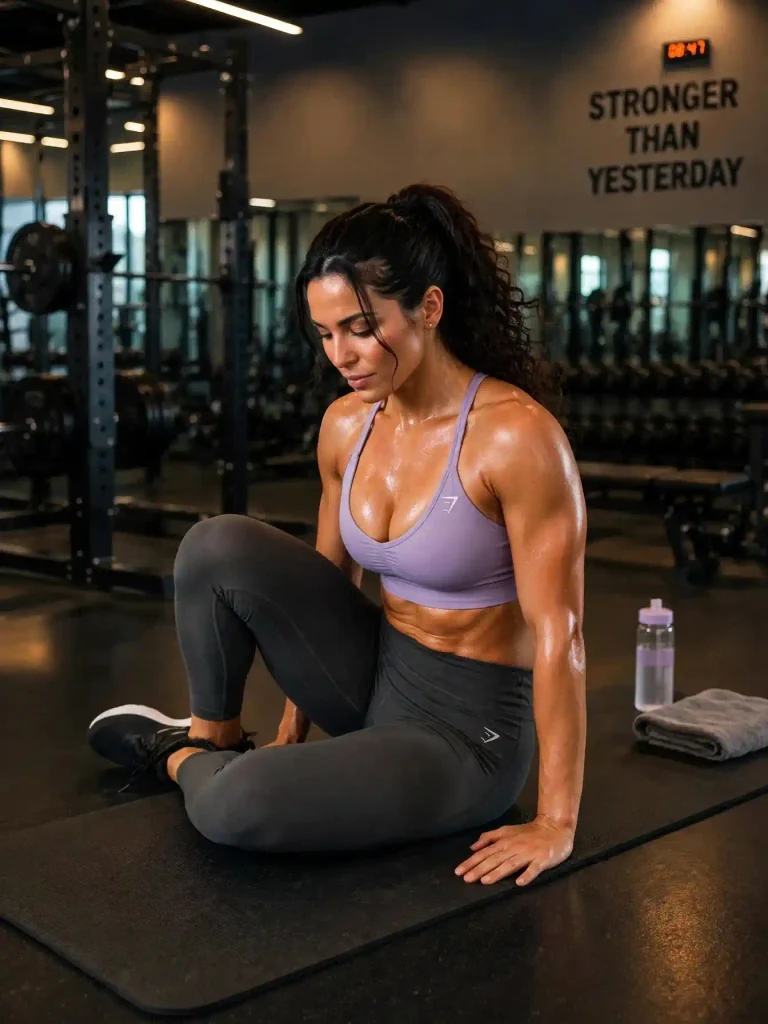
What Is a Mobility Flow Workout?
A mobility flow workout is a sequence of controlled movements designed to help your joints and muscles move comfortably.
Instead of focusing on one exercise at a time, mobility flows connect different movements into a smooth routine. They often include exercises for the hips, shoulders, spine, ankles, and upper back.
A typical mobility flow may combine:
- Dynamic stretching
- Controlled joint movements
- Gentle bodyweight exercises
- Balance and coordination work
- Breathing and posture awareness
The goal isn’t to force your body into deep stretches. It’s to practice moving with control and gradually become more comfortable with everyday movements.
Benefits of a Mobility Flow Workout
Adding mobility exercises to your weekly routine can support several aspects of general fitness.
1. Supports Better Range of Motion
Mobility exercises encourage your joints to move through comfortable ranges of motion. This can make everyday activities, such as reaching overhead, bending down, or turning your body, feel easier.
2. Helps Reduce Feelings of Stiffness
Long periods of sitting or staying in one position can leave you feeling stiff. Gentle movement can help you feel more comfortable and encourage regular movement throughout the day.
3. Improves Movement Control
Mobility training isn’t only about flexibility. It also involves controlling your body as you move. This can help develop coordination and body awareness.
4. Complements Strength Training
Strength workouts and mobility exercises can work well together. While strength training develops the ability to produce force, mobility work helps you practice moving your joints with control.
5. Provides a Relaxing Movement Break
A short mobility routine can be a useful break from work, studying, or screen time. Moving gently and breathing naturally can help you reconnect with your body.
What Do You Need for a Mobility Flow Workout?
One of the best things about mobility training is that you can do most exercises without equipment.
Here are a few useful items:
- Exercise mat: Makes floor movements more comfortable.
- Comfortable clothing: Choose clothes that allow free movement.
- Water bottle: Keep water nearby.
- Yoga block: Optional for additional support during certain movements.
- Open floor space: Make sure you have enough room to move safely.
You can complete the entire routine using only your body weight.
7 Mobility Flow Exercises to Improve Movement
These seven movements target different areas of the body. Perform them slowly and focus on comfortable, controlled motion.
1. Cat-Cow Stretch
<caption>Focus: Spine mobility</caption>
The cat-cow stretch is a gentle movement that helps you practice moving your spine through different positions.
How to do it:
- Start on your hands and knees.
- Place your hands under your shoulders and knees under your hips.
- Slowly round your back while gently looking toward your stomach.
- Move into a comfortable extended position, lifting your chest slightly.
- Continue alternating between the two positions.
Move smoothly and avoid forcing your back.
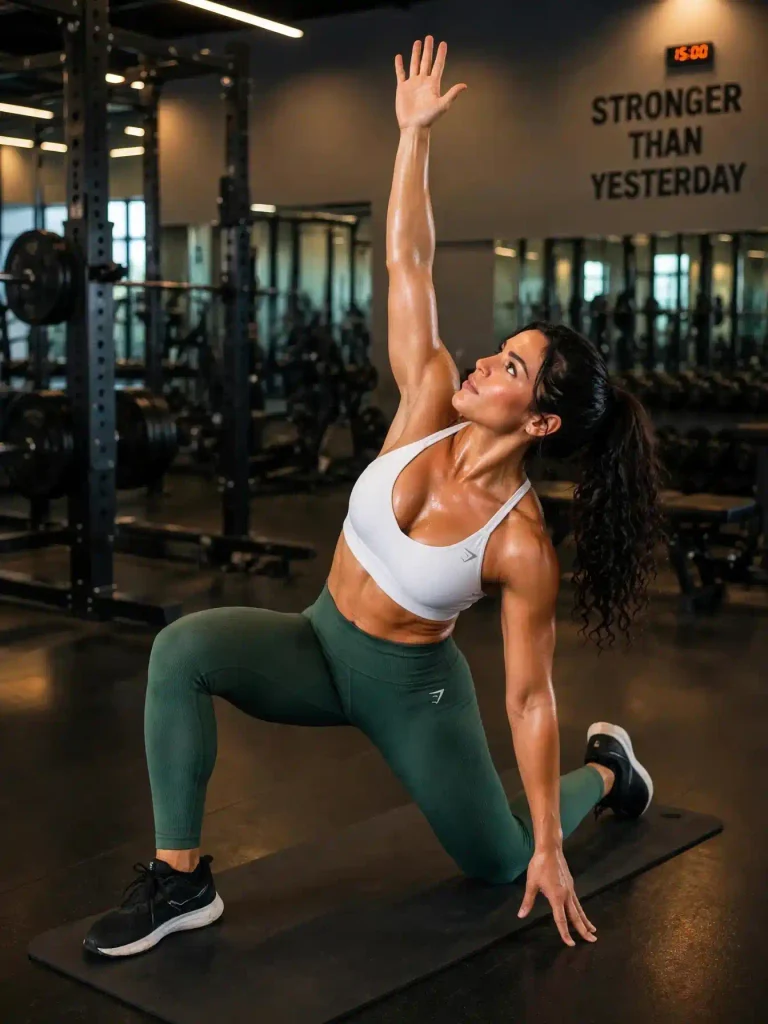
2. World’s Greatest Stretch
<caption>Focus: Hips, upper back, and trunk mobility</caption>
This movement combines a lunge position with a gentle upper-body rotation.
How to do it:
- Start in a comfortable lunge position with one foot forward.
- Place both hands on the floor or on a stable support.
- Gently rotate your upper body toward the front leg.
- Return to the starting position.
- Switch sides and repeat.
Keep your movements controlled and use a smaller range if needed.
3. 90/90 Hip Switches
<caption>Focus: Hip mobility</caption>
The 90/90 position encourages controlled hip rotation.
How to do it:
- Sit on the floor with both knees bent.
- Position your legs so one is in front of you and the other is beside you.
- Keep your torso upright as comfortably as possible.
- Slowly move your knees from one side to the other.
- Use your hands for support if necessary.
Avoid forcing your knees toward the floor.
4. World’s Greatest Shoulder Circles
<caption>Focus: Shoulder mobility</caption>
Controlled shoulder circles are a simple way to move your shoulder joints through a comfortable range.
How to do it:
- Stand upright with your arms relaxed.
- Slowly lift your shoulders toward your ears.
- Move them backward and gently lower them.
- Complete several circles.
- Reverse the direction.
Keep your neck relaxed throughout the movement.
5. Downward Dog to Plank
<caption>Focus: Shoulders, hips, and full-body movement</caption>
This flowing movement connects two familiar bodyweight positions.
How to do it:
- Begin in a high plank position with your hands under your shoulders.
- Push your hips upward and backward into a comfortable downward dog position.
- Keep your knees slightly bent if needed.
- Slowly return to the plank position.
- Repeat with controlled movement.
Use a smaller range if your shoulders or wrists feel uncomfortable.
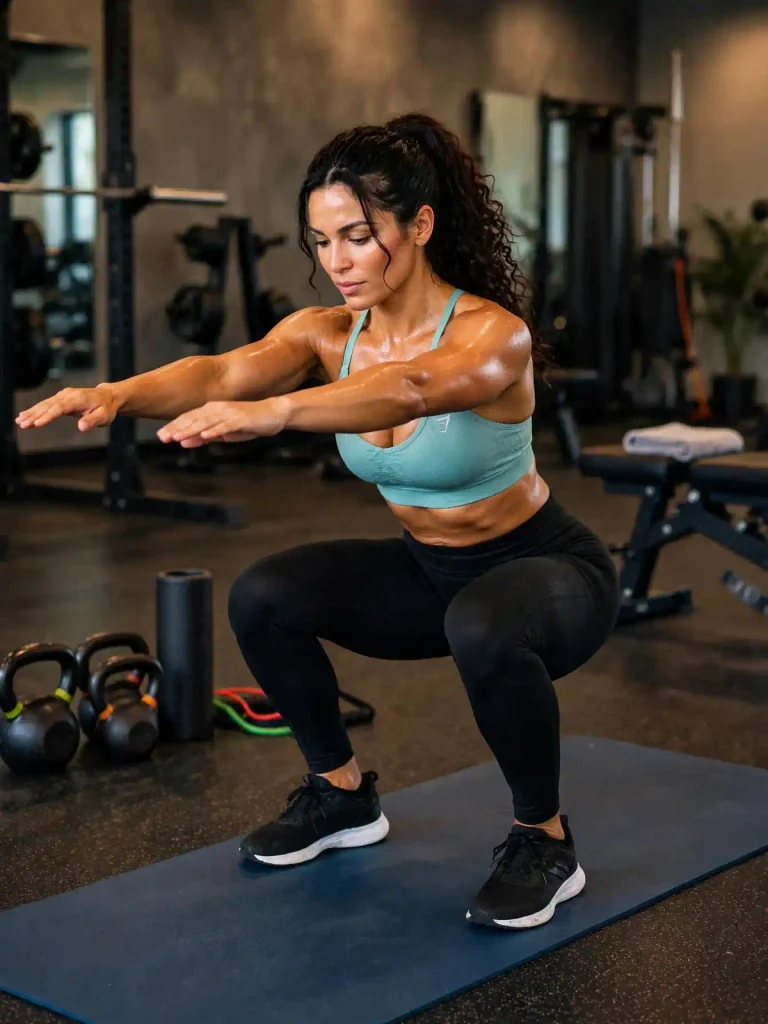
6. Deep Squat Hold
<caption>Focus: Hip and ankle mobility</caption>
A comfortable squat position can help you practice movement through your hips, knees, and ankles.
How to do it:
- Stand with your feet about shoulder-width apart.
- Slowly bend your knees and lower your hips.
- Keep your heels on the floor if comfortable.
- Hold a position that feels manageable.
- Stand up slowly.
You can hold onto a sturdy support or use a cushion beneath your hips if needed.
7. Standing Thoracic Rotations
<caption>Focus: Upper-back mobility</caption>
This exercise encourages gentle rotation through your upper back.
How to do it:
- Stand with your feet comfortably apart.
- Place your hands across your chest.
- Slowly rotate your upper body to one side.
- Return to the center.
- Repeat on the other side.
Keep your hips relatively steady and avoid twisting beyond a comfortable range.
Your 15-Minute Mobility Flow Workout
Now that you know the exercises, you can combine them into one simple routine.
| Exercise | Suggested time |
|---|---|
| Cat-cow stretch | 2 minutes |
| World’s greatest stretch | 2 minutes |
| 90/90 hip switches | 2 minutes |
| Shoulder circles | 1 minute |
| Downward dog to plank | 2 minutes |
| Deep squat hold | 2 minutes |
| Standing thoracic rotations | 2 minutes |
| Gentle movement and breathing | 2 minutes |
| Total | 15 minutes |
Move at a comfortable pace and take breaks whenever necessary. You don’t need to rush to finish the routine within the suggested time.
How Often Should You Do Mobility Exercises?
Mobility exercises can be included in your routine several times throughout the week.
For beginners, short sessions are a practical starting point. You might try a 10- to 15-minute mobility flow on a few days each week or use selected movements as part of your warm-up.
You can also include gentle mobility breaks during the day, especially if you spend long periods sitting.
Remember that recovery and variety matter. Mobility work should complement your other activities rather than replace all forms of exercise.
Common Mobility Training Mistakes to Avoid
Mobility exercises should feel controlled and comfortable. Avoid these common mistakes when following a mobility flow.
Moving Too Quickly
The purpose of mobility training is to practice controlled movement. Rushing through exercises can make it harder to maintain proper technique.
Forcing Deep Stretches
You don’t need to reach the deepest possible position. Work within a comfortable range and allow your movement to develop gradually.
Ignoring Proper Alignment
Pay attention to your posture and joint position. Small adjustments can make an exercise more comfortable.
Forgetting to Breathe
Keep breathing naturally throughout your routine. Avoid holding your breath during challenging positions.
Doing Too Much Too Soon
Start with simple movements and gradually become more familiar with the routine. You don’t need to complete every exercise perfectly on your first attempt.
Tips for Getting the Most Out of Your Mobility Flow
A few simple habits can help make your mobility sessions more enjoyable.
- Start with gentle movements: Give your body time to adjust before moving into more challenging positions.
- Focus on control: Smooth movement is more important than speed.
- Use support when needed: A wall, chair, or yoga block can make certain movements easier.
- Stay consistent: Short, regular sessions can help you build a lasting habit.
- Choose comfortable ranges: Avoid pushing through pain or forcing your joints.
- Combine mobility with other activities: Walking, strength training, and other enjoyable exercises can create a balanced fitness routine.
Is a Mobility Flow Workout Good for Beginners?
Yes. A mobility flow can be adapted to different fitness levels, making it a useful starting point for people who want to improve their movement habits.
Beginners can make exercises easier by reducing their range of motion, using support, or taking longer breaks.
If you have an injury, ongoing joint pain, or a medical condition that affects movement, speak with a qualified healthcare professional before starting a new exercise routine.
Stop any movement that causes pain, dizziness, or unusual discomfort.
Final Thoughts
A mobility flow workout is a simple way to add more controlled movement to your day. By combining exercises for your hips, shoulders, spine, and ankles, you can create a balanced routine without needing a gym or complicated equipment.
The 15-minute routine in this guide is a practical place to begin. Move slowly, focus on comfortable positions, and adjust the exercises to suit your needs.
You don’t need a perfect workout or a complicated plan. Start with a few movements, stay consistent, and make mobility a comfortable part of your everyday fitness routine.



Comments are closed.
[…] heat does not automatically make a workout more effective. The quality of your movement, appropriate resistance, and proper technique remain […]
[…] In this beginner-friendly guide, you’ll discover what functional fitness is, its potential benefits, and 10 simple exercises you can add to your workout routine. […]