
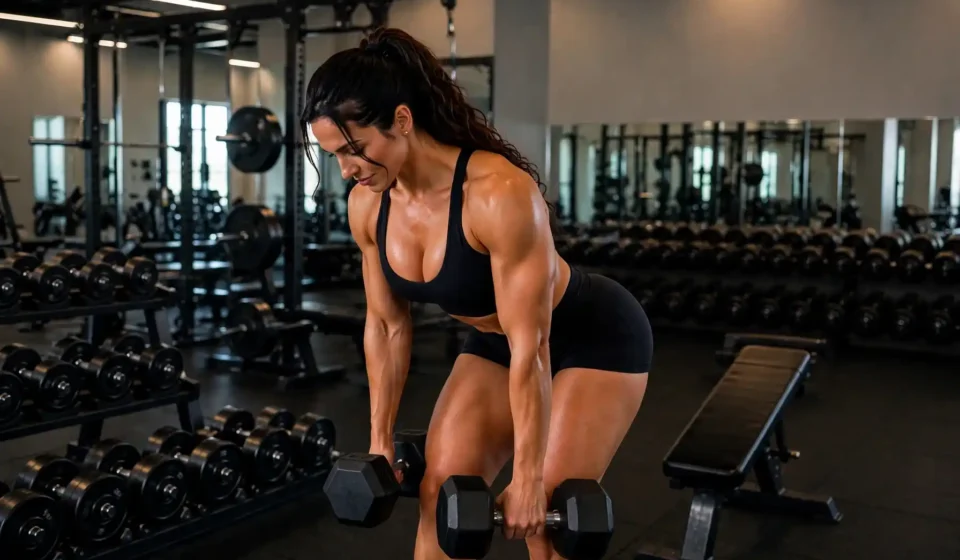

You don’t need a gym full of machines to build a balanced strength training routine. With just a pair of dumbbells and enough space to move, you can work your entire body from home or at the gym.
Full-Body Strength Workout With Dumbbells A full-body strength workout with dumbbells is a practical way to train your legs, glutes, chest, back, shoulders, arms, and core in one session. Dumbbells are also easy to adapt to different fitness levels, making them a useful choice for beginners and people with more training experience.
Whether you’re starting a new fitness routine or looking for a simple workout to add to your weekly schedule, this guide will show you how to train your major muscle groups with effective dumbbell exercises.
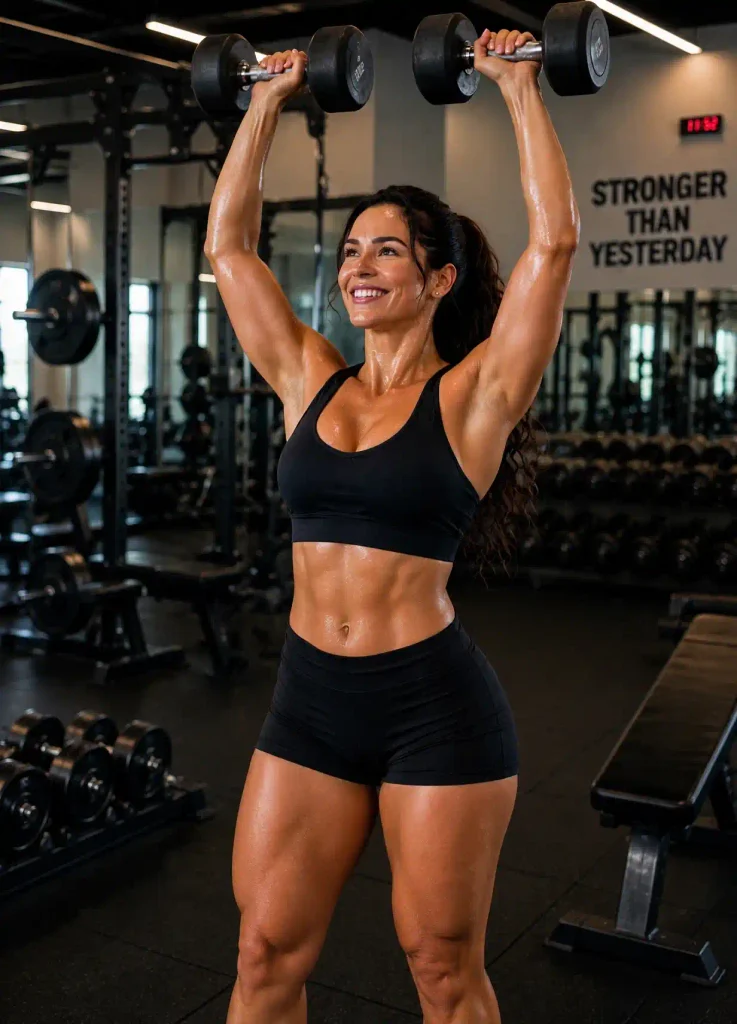
What Is a Full-Body Dumbbell Workout?
A full-body dumbbell workout is a strength training session that uses dumbbells to target several major muscle groups.
Instead of focusing only on your upper or lower body, you combine exercises that work different areas during the same session.
A balanced workout usually includes:
- Squat or lunge movements for the legs and glutes.
- Hip-hinge movements for the hamstrings and glutes.
- Pushing exercises for the chest and shoulders.
- Pulling exercises for the back.
- Core exercises for stability.
Dumbbells allow you to perform these movements using free weights, giving you flexibility in how you organize your training.
Benefits of Full-Body Strength Training With Dumbbells
1. Works Multiple Muscle Groups
A well-planned dumbbell workout can train your entire body in one session. This makes it easier to include different movement patterns without needing several separate workouts.
2. Improves Everyday Strength
Strength training can help you develop the ability to perform everyday activities, such as carrying shopping bags, climbing stairs, and lifting objects.
3. Offers Flexible Training Options
You can adjust the weight of your dumbbells, change the number of repetitions, or choose easier exercise variations to match your experience.
4. Supports Better Movement and Coordination
Many dumbbell exercises require you to control the weight while maintaining balance and posture. Practicing these movements can help develop coordination and body awareness.
5. Makes Home Workouts More Convenient
You don’t need a large exercise machine or a complicated setup. A pair of suitable dumbbells and a small workout area can be enough for a useful full-body session.
8 Best Dumbbell Exercises for a Full-Body Workout
The following exercises cover the major muscle groups and can be combined into one balanced routine.
1. Dumbbell Goblet Squat
<text>Main muscles: Quadriceps, glutes, and core.</text>
<AsyncImage query=”woman performing dumbbell goblet squat exercise fitness studio side view” aspectRatio=”16:9″ width=”100%”/>
The goblet squat is an excellent lower-body exercise for beginners. Holding one dumbbell close to your chest helps you practice the squat movement while maintaining an upright position.
How to perform it:
- Stand with your feet approximately shoulder-width apart.
- Hold one dumbbell vertically against your chest.
- Bend your knees and hips, lowering into a comfortable squat.
- Keep your chest lifted and your feet flat on the floor.
- Push through your feet to return to standing.
Recommended: 2–3 sets of 10–12 repetitions.
2. Dumbbell Romanian Deadlift
<text>Main muscles: Hamstrings, glutes, and lower-back stabilizing muscles.</text>
<AsyncImage query=”woman demonstrating dumbbell Romanian deadlift exercise side view” aspectRatio=”16:9″ width=”100%”/>
The Romanian deadlift is a hip-hinge exercise that strengthens the muscles along the back of your lower body.
How to perform it:
- Stand upright with a dumbbell in each hand.
- Keep your knees slightly bent.
- Push your hips backward while lowering the dumbbells along the front of your legs.
- Keep your back in a comfortable neutral position.
- Stop when you feel a stretch in your hamstrings.
- Push your hips forward to return to standing.
Recommended: 2–3 sets of 10–12 repetitions.
3. Dumbbell Floor Press
<text>Main muscles: Chest, triceps, and shoulders.</text>
<AsyncImage query=”woman performing dumbbell floor chest press exercise on gym mat” aspectRatio=”16:9″ width=”100%”/>
The dumbbell floor press is a useful upper-body pushing exercise. Performing it on the floor limits the range of motion at the shoulder compared with a traditional bench press.
How to perform it:
- Lie on your back with your knees bent.
- Hold a dumbbell in each hand above your chest.
- Keep your elbows slightly away from your body.
- Slowly lower the dumbbells until your upper arms gently touch the floor.
- Press the weights back up without locking your elbows forcefully.
Recommended: 2–3 sets of 8–12 repetitions.
4. One-Arm Dumbbell Row
<text>Main muscles: Upper back, lats, and biceps.</text>
<AsyncImage query=”woman performing one arm dumbbell row with bench fitness exercise” aspectRatio=”16:9″ width=”100%”/>
Dumbbell rows strengthen your back and help balance the pushing movements in your workout.
How to perform it:
- Place one hand on a stable bench or support.
- Hold a dumbbell in the opposite hand.
- Keep your back steady and your torso slightly bent forward.
- Pull the dumbbell toward your hip.
- Lower the weight slowly and repeat.
- Complete the set on the other side.
Recommended: 2–3 sets of 10 repetitions per side.
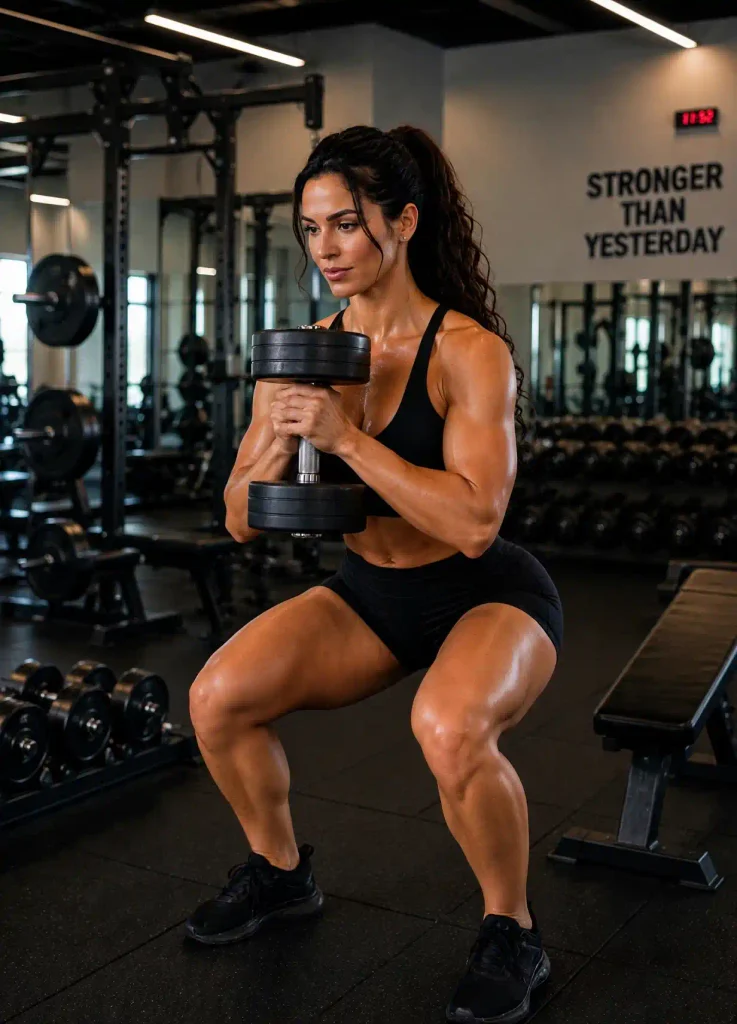
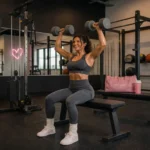
5. Dumbbell Shoulder Press
<text>Main muscles: Shoulders and triceps.</text>
<AsyncImage query=”woman performing seated dumbbell shoulder press gym exercise” aspectRatio=”16:9″ width=”100%”/>
The shoulder press is a basic upper-body exercise that develops pushing strength.
How to perform it:
- Stand or sit with a dumbbell in each hand.
- Bring the dumbbells to shoulder height.
- Keep your core gently engaged.
- Press the weights overhead in a controlled movement.
- Slowly lower them back to shoulder level.
Recommended: 2 sets of 8–12 repetitions.
6. Dumbbell Reverse Lunge
<text>Main muscles: Quadriceps, glutes, and hamstrings.</text>
<AsyncImage query=”woman performing reverse lunges holding dumbbells fitness studio” aspectRatio=”16:9″ width=”100%”/>
Reverse lunges work one leg at a time and can help improve lower-body strength and balance.
How to perform it:
- Stand upright while holding a dumbbell in each hand.
- Step backward with one foot.
- Bend both knees while lowering into a comfortable lunge.
- Keep your front foot flat and your torso controlled.
- Push through your front foot to return to standing.
- Repeat with the opposite leg.
Recommended: 2 sets of 8–10 repetitions per leg.
7. Dumbbell Biceps Curl
<text>Main muscles: Biceps and forearms.</text>
<AsyncImage query=”woman performing standing dumbbell biceps curls gym exercise” aspectRatio=”16:9″ width=”100%”/>
Biceps curls are a simple isolation exercise that strengthens the front of your upper arms.
How to perform it:
- Stand with a dumbbell in each hand.
- Keep your elbows close to your sides.
- Bend your elbows and bring the weights toward your shoulders.
- Avoid swinging your body.
- Slowly lower the dumbbells to the starting position.
Recommended: 2 sets of 10–12 repetitions.
8. Dumbbell Farmer’s Carry
<text>Main muscles: Forearms, grip muscles, shoulders, and core.</text>
<AsyncImage query=”woman performing dumbbell farmers carry walking with weights gym” aspectRatio=”16:9″ width=”100%”/>
The farmer’s carry is a functional exercise that challenges your grip and core while you walk with weights.
How to perform it:
- Hold a dumbbell in each hand.
- Stand tall with your shoulders relaxed.
- Keep your arms straight beside your body.
- Walk forward using controlled, natural steps.
- Maintain an upright posture throughout the movement.
Recommended: 2–3 rounds of 20–30 seconds.
Your Complete Full-Body Dumbbell Workout
You can combine all eight exercises into one training session.
| Exercise | Sets | Repetitions |
|---|---|---|
| Goblet squat | 2–3 | 10–12 |
| Romanian deadlift | 2–3 | 10–12 |
| Floor press | 2–3 | 8–12 |
| One-arm dumbbell row | 2–3 | 10 per side |
| Shoulder press | 2 | 8–12 |
| Reverse lunge | 2 | 8 per leg |
| Biceps curl | 2 | 10–12 |
| Farmer’s carry | 2 | 20–30 seconds |
Rest between sets: Around 60–90 seconds, or longer if you need it to recover and maintain good technique.
For beginners, start with two sets per exercise. You can gradually add a set or increase the resistance as the movements become more familiar.
How Often Should You Do This Workout?
For most beginners, performing a full-body dumbbell workout two or three times per week is a reasonable starting point.
Try leaving a recovery day between challenging full-body sessions.
For example:
- Monday: Full-body dumbbell workout.
- Tuesday: Rest or easy walking.
- Wednesday: Rest or light activity.
- Thursday: Full-body dumbbell workout.
- Friday: Rest.
- Saturday: Optional gentle cardio or mobility.
- Sunday: Rest.
You don’t have to train every day to make progress. Consistency and sufficient recovery are important parts of a balanced strength routine.
How to Choose the Right Dumbbell Weight
Choosing the right weight is important, especially when you’re learning new exercises.
Start with a weight that allows you to complete your planned repetitions with controlled movement and good technique.
Here are a few helpful guidelines:
- Begin with lighter dumbbells when learning an exercise.
- Avoid weights that force you to swing or rush through repetitions.
- If you cannot maintain proper form, reduce the resistance.
- If the exercise feels very easy throughout every set, consider a small increase when you’re ready.
Different exercises may require different weights. For example, you may be comfortable using heavier dumbbells for squats than for shoulder presses.
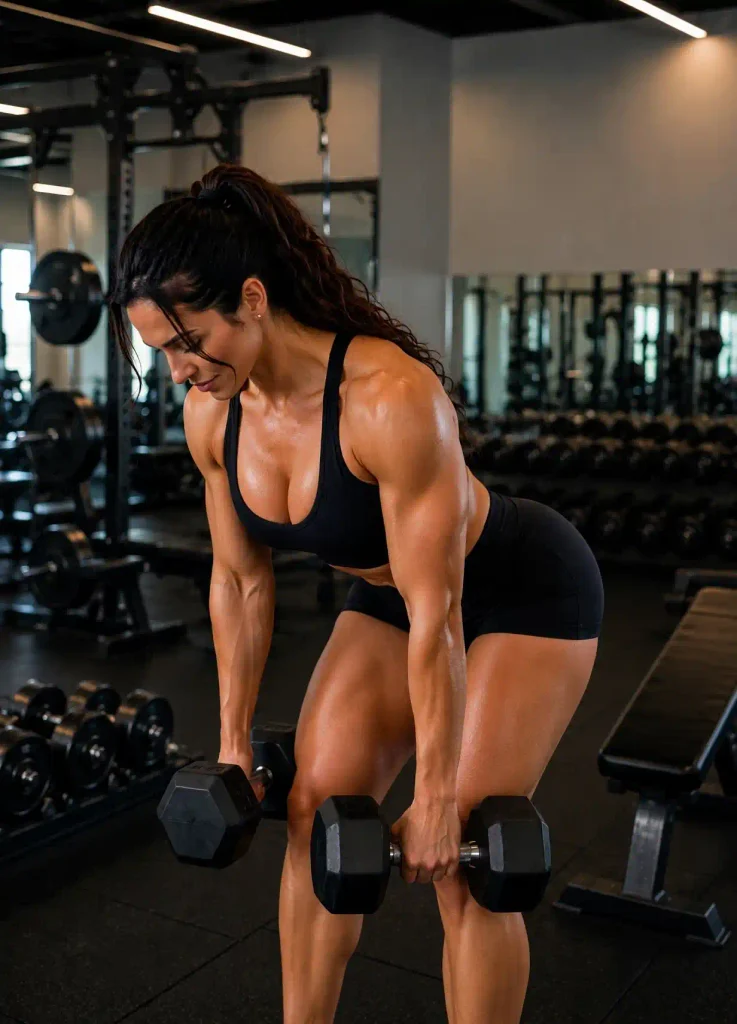
Common Mistakes to Avoid
Using Weights That Are Too Heavy
Lifting heavier weights isn’t always better. If you lose control of the movement, reduce the resistance and focus on proper technique.
Rushing Through Repetitions
Controlled movements help you maintain good form and use the intended muscles. Avoid using momentum to lift or lower the dumbbells.
Skipping the Warm-Up
Spend around five minutes warming up with easy movement, such as walking, arm circles, and bodyweight squats.
Ignoring Recovery
Your muscles need time to adapt to strength training. Avoid repeating demanding full-body workouts without enough recovery.
Forgetting to Train Different Muscle Groups
A balanced routine should include both pushing and pulling exercises, along with movements for your legs, hips, and core.
Final Thoughts
A full-body strength workout with dumbbells is a convenient way to train your major muscle groups without relying on complicated gym equipment.
By combining squats, deadlifts, presses, rows, lunges, and core-focused movements, you can create a balanced routine that works at home or in the gym.
Start with manageable weights, learn the correct technique, and train consistently two or three times per week. As you become more comfortable, gradually adjust your workout to match your progress.
The best strength training routine is one you can perform safely and maintain over time.

Comments are closed.
[…] of creating an ideal schedule that leaves no room for unexpected events, build a routine around your everyday […]