
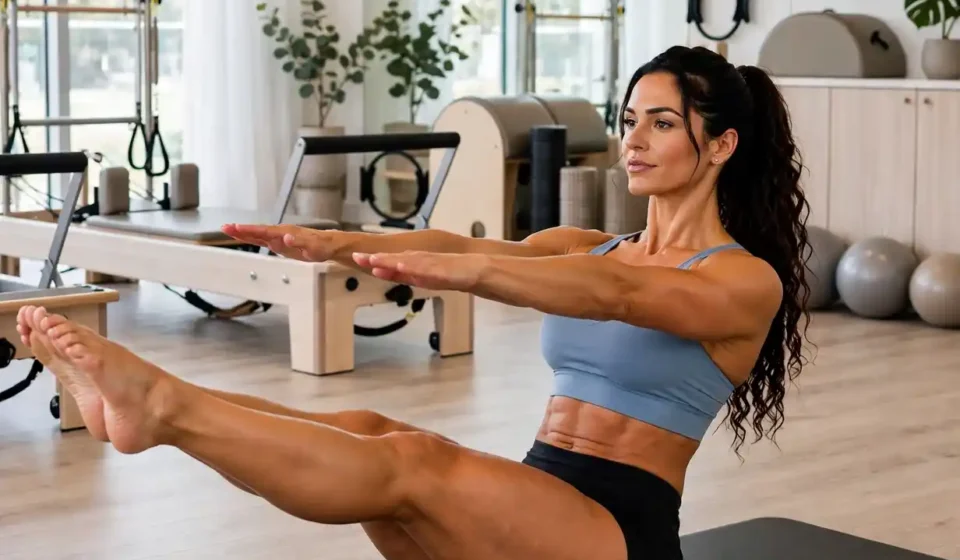

Pilates has become one of the most popular ways to stay active, improve strength, and develop better movement habits. From mat Pilates at home to reformer classes at fitness studios, more people are adding this low-impact workout to their weekly routines.
But can Pilates actually build muscle, or is it mainly useful for flexibility and core strength?
Can Pilates Build Muscle? Benefits, Exercises & Tips The answer is yes, Pilates can help strengthen muscles and improve muscular endurance. However, the results depend on the type of Pilates you practice, how challenging your workouts are, and your overall fitness routine.
Whether you’re new to exercise or looking for a different way to train, here’s what you should know about Pilates and muscle development.
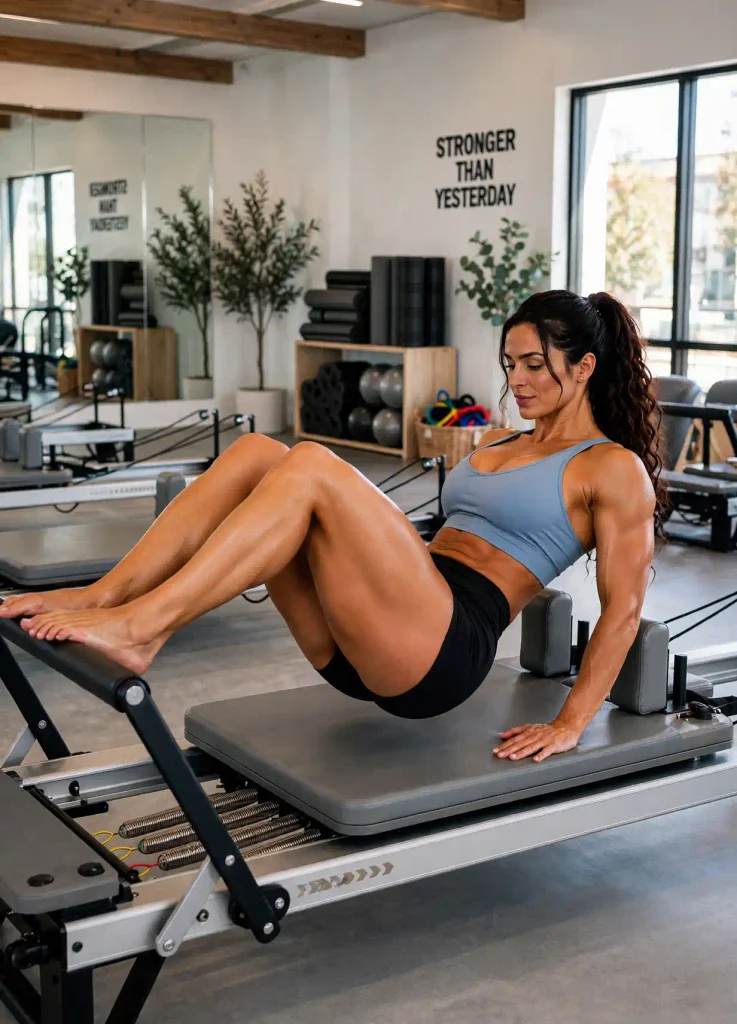
What Is Pilates?
Pilates is a form of low-impact exercise that focuses on controlled movements, breathing, balance, flexibility, and core stability.
Most exercises use your own body weight as resistance, although some Pilates workouts include equipment such as resistance bands, small balls, and reformer machines.
Unlike traditional gym workouts, Pilates places a strong emphasis on movement quality. Exercises are performed with control and precision, helping you develop better coordination and body awareness.
Some common Pilates exercises include:
- The Hundred
- Glute Bridges
- Pilates Roll-Ups
- Leg Circles
- Planks
- Single-Leg Stretch
- Side-Lying Leg Lifts
These movements engage different muscle groups while encouraging controlled breathing and proper technique.
Can Pilates Actually Build Muscle?
Yes, Pilates can contribute to muscle development, particularly for beginners and people returning to regular physical activity.
Many Pilates movements require you to support, stabilize, and control your body against resistance. This challenges muscles in your abdomen, back, hips, legs, and arms.
For example, holding a plank activates your core and upper body, while glute bridges engage the muscles around your hips and lower body.
However, Pilates is not always the most effective option for maximizing muscle growth. Traditional resistance training makes it easier to gradually increase the resistance placed on your muscles, which is an important part of building strength and muscle over time.
Research comparing Pilates with other exercise methods has found that Pilates can improve strength, although the available evidence is still limited and does not establish that it is better than other forms of exercise.
The best approach depends on your goals and the type of training you enjoy.
Which Muscles Does Pilates Work?
One of the biggest advantages of Pilates is that it involves several muscle groups rather than focusing on just one area.
Here are some of the main muscles engaged during a typical Pilates session.
1. Core Muscles
Core strength is one of the main focuses of Pilates.
Exercises such as planks, roll-ups, and the Hundred engage the abdominal muscles and deeper muscles that help stabilize your trunk.
A stronger core can support everyday movements, balance, and overall physical performance.
2. Glutes and Hips
Many Pilates exercises involve controlled hip movements and lower-body stabilization.
Glute bridges, side leg lifts, and clamshells are examples of movements that engage the gluteal muscles and muscles around the hips.
These exercises can help improve hip stability and lower-body strength.
3. Back Muscles
Pilates includes several exercises that encourage controlled movement and stability through the back.
Movements such as swimming and bird-dog variations engage the muscles supporting your spine and help develop better coordination.
4. Leg Muscles
Your legs work during many Pilates exercises, especially movements involving squats, lunges, leg circles, and bridges.
These exercises can challenge your thighs, hamstrings, calves, and hip muscles.
5. Arms and Shoulders
Although Pilates is often associated with core training, your upper body also gets involved.
Planks, push-up variations, and exercises using resistance bands can engage your shoulders, chest, and arms.
Mat Pilates vs. Reformer Pilates: Which Is Better for Building Muscle?
There are two popular types of Pilates, and both can provide useful strength challenges.
Mat Pilates
<PRIVATE_PERSON>at Pilates is performed on a mat and mainly uses body weight for resistance.
It is a convenient option for beginners because you can practice many exercises at home without purchasing expensive equipment.
Benefits include:
- Improving core stability
- Developing muscular endurance
- Supporting better coordination
- Practicing controlled movement
- Building a consistent exercise routine
The difficulty of mat Pilates can be adjusted through exercise variations, movement control, and resistance bands.
Reformer Pilates
Reformer Pilates uses a specialized machine with a sliding platform, springs, and straps.
The springs provide adjustable resistance, allowing exercises to be adapted to different experience and fitness levels.
Potential benefits include:
- Adjustable resistance during exercises
- More exercise variations
- Greater opportunities for progressive challenges
- Improved movement control
- Training different muscle groups
Reformer Pilates can provide a more adjustable resistance challenge than basic mat exercises, but neither option automatically guarantees greater muscle growth.
Which should you choose?
If you want an affordable way to get started, mat Pilates is a practical choice. If you prefer equipment-based exercises and supervised instruction, reformer Pilates may be worth exploring.
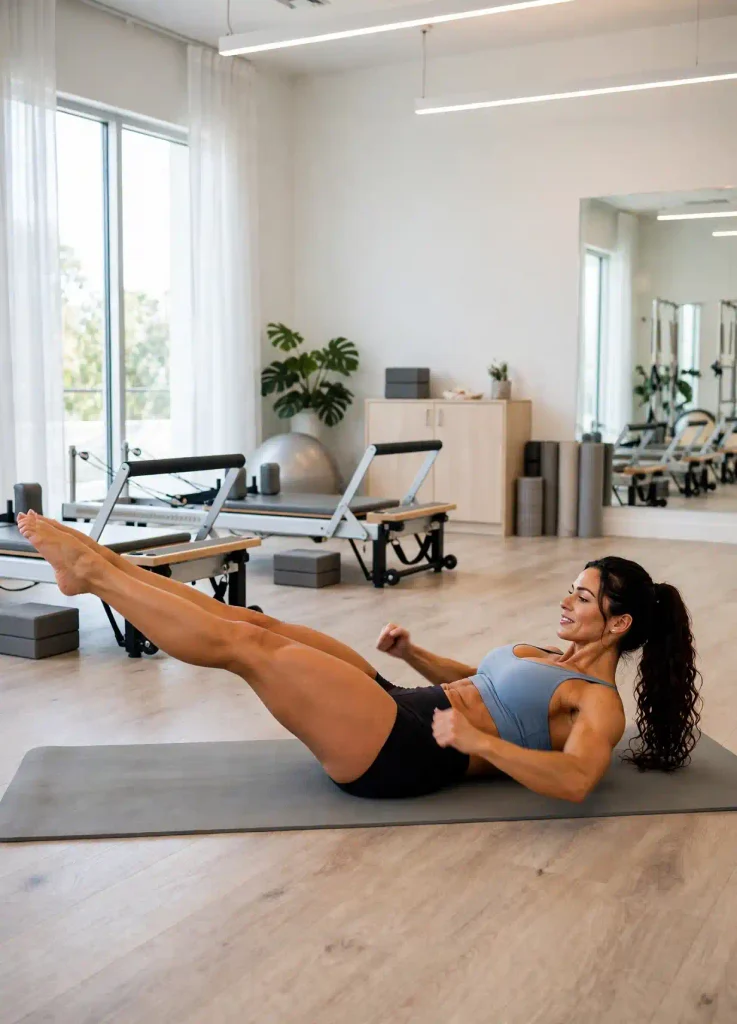
How Often Should You Do Pilates?
Consistency matters more than trying to fit too many workouts into your schedule.
For beginners, starting with two or three Pilates sessions per week can be a manageable way to learn the movements and develop a routine.
As you become more comfortable, you can adjust your schedule based on your recovery, experience, and other physical activities.
A balanced weekly routine might include:
- Two Pilates sessions
- Two strength-training sessions
- One walking or other enjoyable cardio session
- Regular rest and recovery days
You do not need to exercise every day to develop strength. Giving your body enough time to recover is an important part of maintaining a healthy routine.
Can Pilates Replace Weight Training?
Pilates and traditional strength training share some benefits, but they are not exactly the same.
Pilates focuses on controlled movement, stability, coordination, and muscular endurance. Traditional resistance training often uses weights, machines, or resistance bands to provide progressively greater challenges.
If your main goal is to develop overall strength and muscle, combining both methods can be a useful approach.
For example, you might use resistance training for exercises such as squats, rows, and presses, while using Pilates to practice core stability, flexibility, and movement control.
You do not have to choose one method exclusively. Both can play a role in a balanced fitness routine.
5 Beginner-Friendly Pilates Exercises to Try
If you’re interested in starting Pilates, these simple movements are a good introduction.
1. Glute Bridge
The glute bridge is a beginner-friendly exercise that engages the glutes, hips, and core.
How to do it:
- Lie on your back with your knees bent.
- Place your feet flat on the floor.
- Gently engage your core.
- Lift your hips while keeping your shoulders on the mat.
- Lower your hips slowly and repeat.
Focus on controlled movement rather than lifting as high as possible.
2. Bird Dog
Bird dog is a useful exercise for practicing core stability and coordination.
How to do it:
- Start on your hands and knees.
- Keep your back in a comfortable neutral position.
- Extend one arm forward.
- Extend the opposite leg backward.
- Return to the starting position and switch sides.
Move slowly and avoid twisting your hips.
3. Pilates Roll-Up
This movement challenges abdominal control and coordination.
How to do it:
- Lie on your back with your legs extended.
- Reach your arms toward the ceiling.
- Slowly lift your head and shoulders.
- Continue rolling your upper body forward as comfortably as possible.
- Return to the starting position with control.
Beginners can bend their knees or use a smaller range of movement.
4. Side-Lying Leg Lift
Side-lying leg lifts engage the muscles around your hips and outer thighs.
How to do it:
- Lie on your side with your legs extended.
- Support your head comfortably with your lower arm.
- Slowly lift your upper leg.
- Pause briefly.
- Lower it with control and repeat on the other side.
Keep your hips stacked rather than rolling backward.
5. Modified Plank
A modified plank helps develop core and upper-body stability.
How to do it:
- Start on your hands and knees.
- Place your hands underneath your shoulders.
- Step one foot backward, followed by the other, if comfortable.
- Keep your body aligned without forcing your lower back.
- Hold briefly and return to your starting position.
You can also keep your knees on the mat to make the exercise easier.
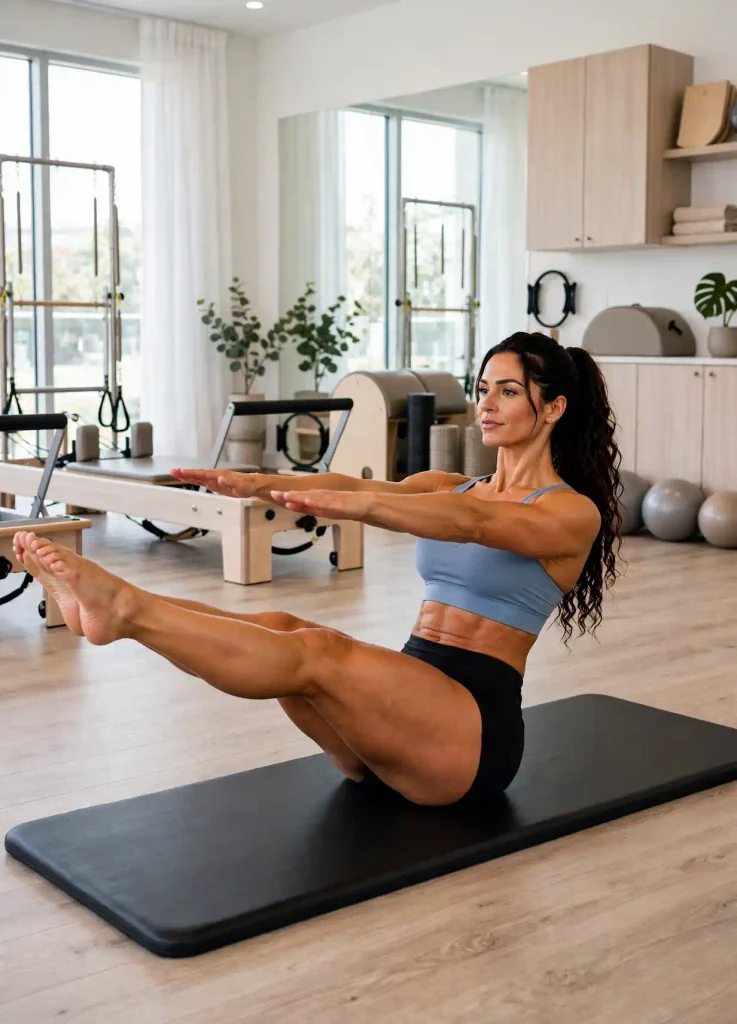
Tips for Getting More Strength Benefits From Pilates
If you want to make your Pilates sessions more challenging, focus on improving your technique and gradually increasing the difficulty.
Here are a few helpful tips:
1. Focus on proper technique
Controlled movements are more useful than rushing through exercises. Take your time to understand each movement.
2. Gradually increase the challenge
As exercises become easier, try appropriate variations, resistance bands, or slightly longer holds.
3. Stay consistent
A regular routine helps you develop better movement skills and physical fitness over time.
4. Include different types of exercise
Combining Pilates with enjoyable activities such as walking, cycling, or strength training can help create a more balanced routine.
5. Give yourself time to recover
Rest, sleep, and regular meals all support your body’s ability to recover from physical activity.
Frequently Asked Questions About Pilates and Muscle Building
Is Pilates enough to build muscle?
Pilates can improve muscular strength and endurance, especially for beginners. However, people looking to maximize muscle growth may benefit from including progressive resistance training.
Is mat Pilates effective for strength?
Yes. Mat Pilates uses body weight as resistance and includes exercises that challenge the core, hips, legs, and upper body.
Is reformer Pilates better than mat Pilates?
Not necessarily. Reformer Pilates offers adjustable spring resistance, while mat Pilates relies mainly on body weight. Both can improve strength, coordination, and movement control.
Can beginners build strength with Pilates?
Yes. Pilates is adaptable, making it possible for beginners to start with simpler movements and gradually progress as their technique improves.
Should I combine Pilates with strength training?
Combining both can be a great option. Pilates supports core stability and movement control, while strength training provides additional opportunities to progressively challenge your muscles.
Final Thoughts
So, can Pilates build muscle? Absolutely, it can help improve muscular strength, endurance, and overall physical fitness.
While it may not replace progressive resistance training for people focused on maximizing muscle growth, Pilates offers plenty of benefits on its own.
Whether you choose mat Pilates, reformer classes, or a combination of different workouts, the most important thing is finding an enjoyable routine that you can maintain.
Start at a comfortable level, focus on proper technique, and give yourself time to improve. Consistency and a balanced approach can make a real difference in your overall fitness.

Comments are closed.
[…] query=”woman performing dumbbell floor chest press exercise on gym mat” aspectRatio=”16:9″ […]