


A beginner-friendly 4-day 10-Week Strength Training Program for Women Over 40 build strength, improve fitness, and develop healthy exercise habits.
Staying active and building strength can be important at every age. For women over 40, regular strength training can help maintain muscle, support bone health, improve balance, and make everyday activities easier.
However, starting a new fitness routine can feel challenging, especially if you haven’t exercised regularly or have a busy schedule.
The good news is that you don’t need complicated workouts to get started. With a structured plan, manageable exercises, and enough time to recover, you can gradually develop strength and confidence.
This 10-week workout program introduces four weekly strength-training sessions, along with cardio, core exercises, and active recovery. It is designed for beginners, but exercises and training days can be adjusted to suit individual needs.

Why Strength Training Matters After 40
Strength training can be a valuable part of a healthy lifestyle at any age. As we get older, maintaining muscle strength becomes increasingly important for mobility, balance, and everyday activities.
Regular resistance training can help you:
- Maintain muscle strength: Strength exercises help you maintain and develop the muscles you use every day.
- Support bone health: Weight-bearing and resistance exercises can help maintain bone strength.
- Improve balance and stability: Strong muscles help support your movements and coordination.
- Make everyday activities easier: Building strength can help with tasks such as climbing stairs, carrying groceries, and getting up from a chair.
- Support long-term fitness: A consistent exercise routine can help you remain active and independent.
You don’t need to lift heavy weights to benefit from strength training. Starting with manageable resistance and learning proper technique are important first steps.
10-Week Workout Program at a Glance
Here is an overview of the training plan.
| Program Detail | Description |
|---|---|
| Program duration | 10 weeks |
| Training level | Beginner |
| Strength workouts | 4 days per week |
| Workout split | Upper body and lower body |
| Workout duration | Approximately 60–80 minutes |
| Equipment | Dumbbells, barbells, machines, cables, or bodyweight |
| Additional activities | Cardio, core training, and active recovery |
| Main focus | Strength, mobility, and general fitness |
The workout schedule is a guide rather than a strict rule. You can adjust the days and exercises to fit your schedule and abilities.
How the 10-Week Training Program Works
The program is divided into three phases. Each phase gives you time to become familiar with the exercises and gradually develop your strength.
Weeks 1–3: Build a Strong Foundation
The first three weeks focus on learning the exercises and establishing a consistent routine.
During this phase:
- Start with light weights or bodyweight exercises.
- Learn the correct technique for each movement.
- Take enough rest between sets.
- Focus on controlled movements rather than lifting heavier weights.
- Adjust exercises if they feel uncomfortable.
You don’t need to push yourself to exhaustion. The goal is to become familiar with the exercises and build confidence.
Weeks 4–7: Gradually Develop Strength
Once you’re comfortable with the exercises, you can gradually increase the challenge.
During this phase:
- Continue practicing proper technique.
- Increase resistance only when you’re ready.
- Keep your movements controlled.
- Allow enough time for recovery.
- Adjust the number of repetitions according to your abilities.
Progress doesn’t have to happen every week. Some weeks, maintaining your current level is a perfectly reasonable goal.
Weeks 8–10: Improve Strength and Consistency
The final phase focuses on continuing your progress while maintaining good exercise habits.
You can gradually increase the difficulty of familiar exercises if they feel manageable. However, there is no need to increase weights or repetitions if you’re not ready.
By this stage, you may feel more comfortable with the workout structure and have a better understanding of how your body responds to exercise.
Weekly Workout Schedule
The program uses four strength-training days, with cardio and recovery activities on the other days.
| Day | Activity |
|---|---|
| Monday | Upper Body Workout A |
| Tuesday | Lower Body Workout A |
| Wednesday | Light Cardio and Core |
| Thursday | Upper Body Workout B |
| Friday | Lower Body Workout B |
| Saturday | Active Recovery |
| Sunday | Rest or Gentle Activity |
You can move the sessions to different days if needed. Try to avoid scheduling demanding strength workouts on consecutive days when possible, so your muscles have time to recover.
Upper Body Workout A
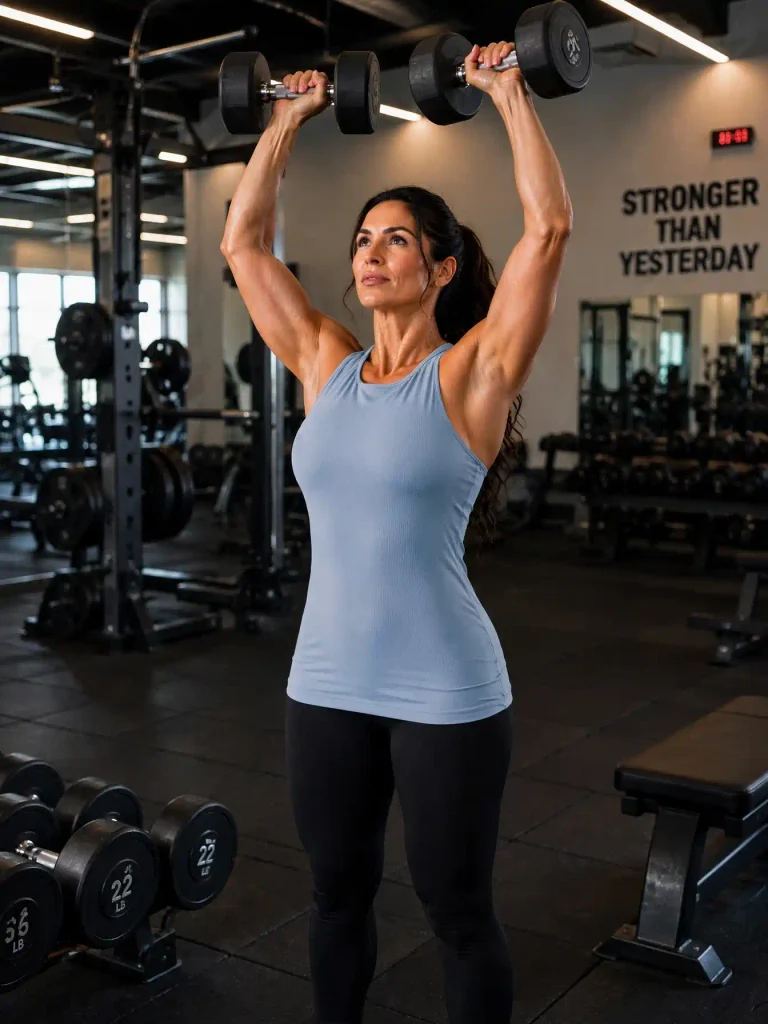
This workout focuses on the shoulders, back, chest, and arms. It includes a combination of pushing and pulling exercises to help develop upper-body strength.
| Exercise | Sets | Repetitions | Rest |
|---|---|---|---|
| Seated Shoulder Press | 3 | 12, 10, 8 | 2–3 minutes |
| Lat Pulldown | 3 | 12, 10, 8 | 2–3 minutes |
| One-Arm Dumbbell Row | 3 | 12, 10, 8 per side | 2–3 minutes |
| Face Pulls | 3 | 12, 10, 8 | 60–90 seconds |
| Push-Ups | 2 | Comfortable number | 90–120 seconds |
Workout tips:
- Choose weights that allow you to maintain good form.
- Use a wall or bench for modified push-ups if needed.
- Avoid rushing through repetitions.
- Take longer breaks whenever necessary.
If you’re new to these exercises, ask a qualified trainer to demonstrate the movements and help you adjust the equipment.
Lower Body Workout A
This session focuses on the legs, hips, and glutes. It combines exercises that develop lower-body strength and coordination.
| Exercise | Sets | Repetitions | Rest |
|---|---|---|---|
| Goblet Squat | 3 | 12, 10, 8 | 2–3 minutes |
| Hip Thrust | 3 | 12, 10, 8 | 2–3 minutes |
| Leg Press | 3 | 12, 10, 8 | 2–3 minutes |
| Single-Leg Curl | 3 | 12, 10, 8 per side | 60–90 seconds |
| Calf Raise | 2 | Comfortable number | 60–90 seconds |
Workout tips:
- Start with bodyweight squats if you’re unfamiliar with the movement.
- Use a comfortable range of motion.
- Keep your movements steady and controlled.
- Adjust the leg press machine to suit your height and comfort.
If an exercise causes pain or feels unsuitable, stop and consider an easier variation.
Wednesday: Light Cardio and Core Training
Wednesday is a good opportunity to include gentle cardio and core exercises without adding another demanding strength session.
Choose an activity you enjoy, such as:
- Walking
- Cycling at a comfortable pace
- Swimming
- Gentle aerobics
You can also include a few core exercises, such as:
- Bird dogs
- Dead bugs
- Modified planks
- Gentle abdominal exercises
Start with a duration that feels comfortable. You can gradually increase your activity as your fitness improves.
The purpose of this session is to support general fitness while giving your muscles a break from heavier strength training.
Upper Body Workout B
The second upper-body session uses different exercises to work the chest, back, shoulders, and arms.
| Exercise | Sets | Repetitions | Rest |
|---|---|---|---|
| Dumbbell Bench Press | 3 | 12, 10, 8 | 2–3 minutes |
| Seated Cable Row | 3 | 12, 10, 8 | 2–3 minutes |
| Dumbbell Lateral Raise | 3 | 12, 10, 8 | 60–90 seconds |
| Rope Triceps Extension | 3 | 12, 10, 8 | 60–90 seconds |
| Preacher Curl | 3 | 12, 10, 8 | 60–90 seconds |
Workout tips:
- Keep your back supported during seated exercises.
- Use a manageable weight for shoulder exercises.
- Avoid swinging your arms during curls.
- Focus on smooth movements and comfortable positioning.
If you’re unfamiliar with any machine or exercise, ask a trainer for help before using it.
Lower Body Workout B
This session includes exercises that work the legs, glutes, and core. It also introduces lateral movements to help develop coordination and balance.
| Exercise | Sets | Repetitions | Rest |
|---|---|---|---|
| Romanian Deadlift | 3 | 12, 10, 8 | 2–3 minutes |
| Lateral Lunge | 3 | 12, 10, 8 per side | 90–120 seconds |
| Glute Bridge | 3 | 12, 10, 8 | 2–3 minutes |
| Pallof Press | 3 | 12, 10, 8 per side | 45–75 seconds |
| Box Squat or Step-Up | 2 | Comfortable number | 90–120 seconds |
Workout tips:
- Begin Romanian deadlifts with light weights while learning the hip-hinge movement.
- Use a chair or stable support when practicing step-ups.
- Keep your movements controlled.
- Choose between box squats and step-ups based on your comfort and experience.
You can replace exercises that don’t suit your mobility or abilities with suitable alternatives.
Nutrition and Hydration for an Active Lifestyle
Eating a balanced diet and drinking enough water can help support your exercise routine.
Rather than following a restrictive diet, focus on eating a variety of foods that provide energy and important nutrients.
Include Protein in Your Meals
Protein helps your body maintain and repair muscle tissue. Good sources include:
- Eggs
- Fish
- Chicken
- Beans and lentils
- Greek yogurt
- Tofu
- Milk
Include a variety of protein-rich foods in your regular meals.
Don’t Forget Carbohydrates
Carbohydrates provide energy for exercise and everyday activities.
Useful sources include:
- Oatmeal
- Rice
- Potatoes
- Whole-grain bread
- Fruit
- Pasta
There’s no need to eliminate carbohydrates when following a strength-training routine. A balanced diet can include carbohydrates, protein, and healthy fats.
Stay Hydrated
Water is important for normal body functions and physical activity.
Drink regularly throughout the day, and remember to have water available during your workouts. Your hydration needs may vary depending on the weather, activity level, and how much you sweat.
Sleep and Recovery: An Important Part of Training
Exercise is only one part of a successful fitness routine. Recovery is also important.
Your body needs time to adapt to physical activity, and getting enough sleep can support your general health and recovery.
Here are a few habits that may help:
- Maintain a regular sleep schedule.
- Make time to relax before bed.
- Take rest days when needed.
- Avoid increasing your training intensity too quickly.
- Choose gentle activities on recovery days if they feel comfortable.
You don’t have to follow a perfect routine every day. Consistent, manageable habits are more useful than trying to do everything at once.
How to Adjust the Program to Your Needs
Everyone has different fitness levels, schedules, and exercise preferences. This program can be adapted to suit your circumstances.
If you’re a beginner: Start with lighter resistance, fewer exercises, or shorter sessions. Focus on learning the movements before increasing the difficulty.
If you’re short on time: You can divide your workout into shorter sessions or reduce the number of exercises. Choose movements that cover different muscle groups.
If you have joint discomfort: Consider lower-impact exercises or supported variations. A qualified healthcare professional or physiotherapist can help you identify suitable options.
If you need more recovery time: Add extra rest days or reduce the intensity of your workouts. Recovery is an important part of developing a sustainable exercise routine.
If you have a medical condition, a history of injury, or concerns about starting strength training, speak with a healthcare professional before beginning the program.
Frequently Asked Questions
Can women over 40 start strength training?
Yes. Many women can begin strength training in their 40s and beyond. The key is to choose exercises appropriate for their current fitness level and progress gradually.
If you have health concerns or existing injuries, seek professional guidance before starting.
Do I need to train four days a week?
No. Four days is the schedule used in this program, but it’s not a requirement for everyone. You can adjust the number of training days to suit your schedule and experience.
A routine you can maintain comfortably is more useful than one that leaves you exhausted.
Can I change the exercises in this program?
Yes. You can substitute exercises based on your equipment, mobility, experience, or personal preferences.
For example, you can perform bodyweight squats instead of goblet squats or use a supported exercise when needed.
Should I do cardio on rest days?
Gentle activities such as walking or stretching can be suitable on recovery days if you feel comfortable. However, you don’t have to exercise every day. Taking a complete rest day is also a valuable option.
What if I miss a workout?
Missing a workout occasionally is normal. Simply continue with your routine when you’re able. You don’t need to double your next workout to make up for a missed session.
Is this program suitable for complete beginners?
The program is designed for beginners, but some exercises require experience or instruction to perform safely. Beginners may need to use lighter weights, easier variations, or fewer exercises at first.
Final Thoughts
Starting a strength-training routine after 40 can be a positive step toward maintaining strength, mobility, and general fitness.
This 10-week program provides a structured starting point with four weekly strength workouts, light cardio, core exercises, and recovery days. However, you don’t have to follow every detail perfectly.
Choose exercises that suit your abilities, learn proper technique, and give yourself enough time to rest. You can adjust the schedule as your experience and confidence develop.
The most important part of any fitness routine is finding an approach that supports your health and fits comfortably into your life.



Comments are closed.
[…] In this guide, we’ll explore the benefits of leg training, explain some of the most useful exercises, and share three workout examples for different fitness levels and schedules. […]