
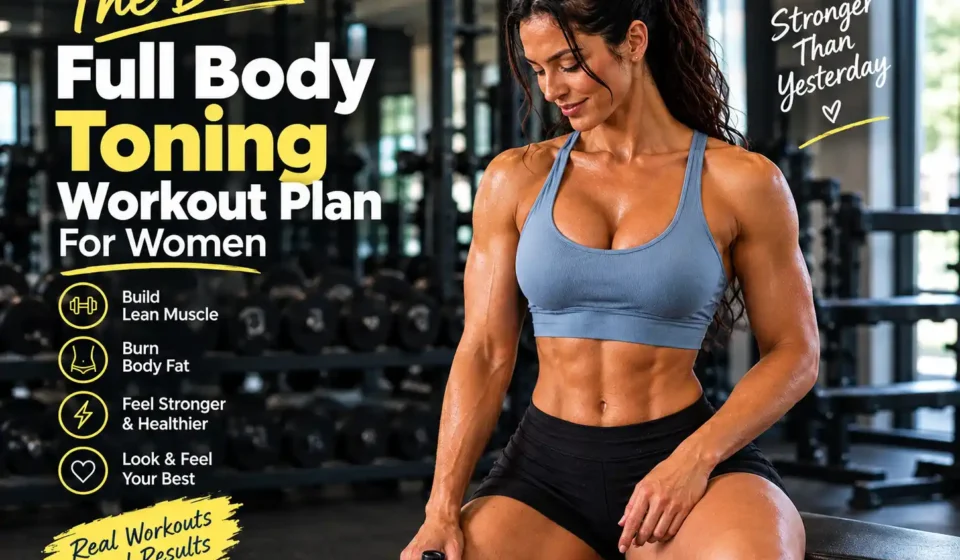

Category: Women’s Workouts, Fitness Tips, Strength Training
Reading time: 8–10 minutes
Staying active is about much more than how you look. Regular exercise can help you feel stronger, improve your energy, support your overall health, and build confidence in your everyday life.
If you’re new to the gym or simply looking for a workout routine that fits into your busy schedule, a full-body workout is a great place to start.
The good news is that you don’t need complicated exercises or hours at the gym to get started. With a few basic movements, some consistency, and enough time to recover, you can gradually improve your strength and fitness.
In this guide, we’ll explain the basics of full-body strength training, introduce eight beginner-friendly gym exercises, and share a simple workout you can also adapt for home.
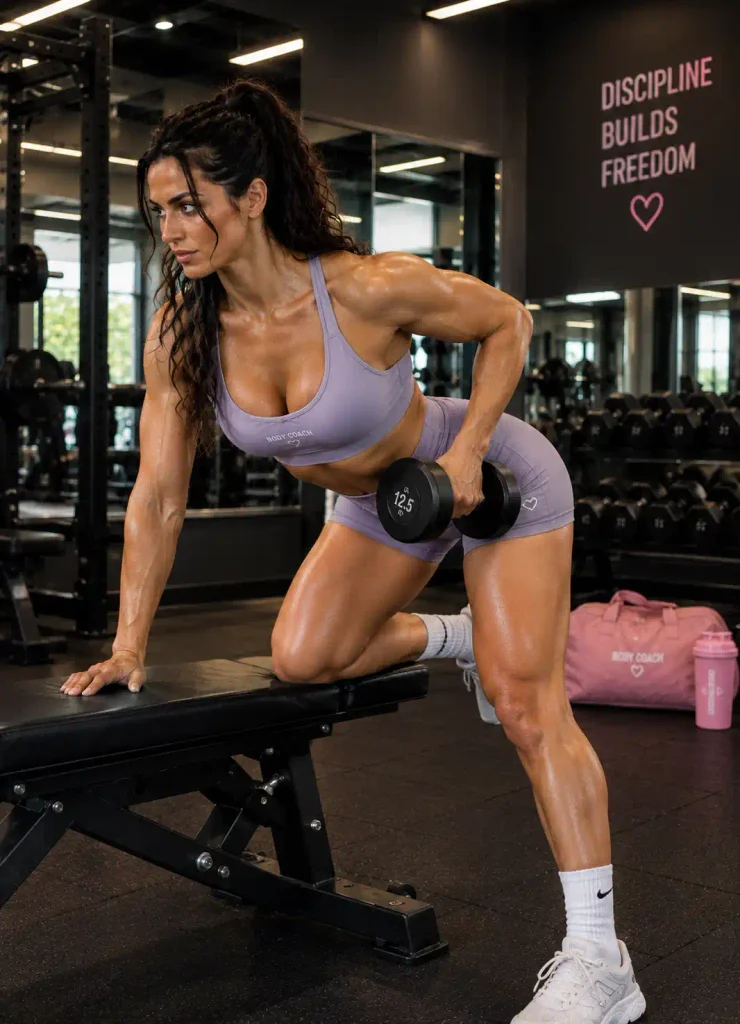
What Is a Full-Body Workout?
A full-body workout is a training session that works several major muscle groups in one session.
Instead of focusing on just your legs, arms, or stomach, you combine exercises that strengthen your entire body.
A balanced full-body workout typically includes:
- Leg exercises: Help strengthen your thighs, hips, and glutes.
- Upper-body exercises: Work your arms, shoulders, chest, and back.
- Core exercises: Help improve stability, balance, and posture.
- Compound movements: Train several muscle groups at the same time.
Full-body workouts are particularly useful for beginners because they allow you to practise different movements without needing a complicated training schedule.
You can perform them at the gym or at home, depending on the equipment available and your experience.
Why Is Strength Training Important for Women?
Strength training offers many benefits beyond building muscle. It’s an excellent way to support your physical health and develop skills that are useful in everyday life.
Here are some of the main benefits.
1. Build Strength and Muscle
Strength training challenges your muscles and helps them adapt over time.
Whether you’re carrying shopping bags, climbing stairs, or playing sports, having stronger muscles can make everyday activities easier.
You don’t need to lift extremely heavy weights to benefit. Beginners can start with bodyweight exercises or light weights and gradually increase the difficulty as they become more comfortable.
2. Improve Balance and Posture
Many strength exercises involve the muscles that help support your body and maintain balance.
Exercises such as squats, rows, and controlled core movements can help you develop better movement habits and coordination.
Good technique is more important than lifting heavy weights, especially when you’re learning a new exercise.
3. Support Your Bone Health
Weight-bearing activities and resistance exercises can help support bone health.
Building an active lifestyle that includes strength training, walking, and other enjoyable physical activities can contribute to long-term health.
4. Improve Your Energy and Mood
Exercise can be a great way to take a break from a busy day.
Many people find that regular physical activity helps them manage stress, sleep better, and feel more energetic.
You don’t have to complete an intense workout to enjoy these benefits. Even a gentle session can be a positive step toward a more active lifestyle.
How Often Should You Do Full-Body Workouts?
If you’re new to strength training, there’s no need to exercise every day.
Starting with two non-consecutive strength-training sessions per week can be a manageable way to learn the movements and build a routine.
As you gain experience, you can adjust your schedule according to your goals, fitness level, and recovery.
Remember to give your muscles enough time to rest between challenging workouts. Rest is an important part of becoming stronger.
You can also include activities you enjoy, such as walking, cycling, dancing, or swimming.
The most useful routine is one that you can enjoy and maintain without feeling exhausted.
The Best Full-Body Workout Exercises for Women
You don’t need dozens of different exercises to have a balanced workout. A few simple movements can help you train your major muscle groups.
Here are eight exercises to consider when putting together a beginner-friendly gym routine.
1. Squats
Muscles worked: Quadriceps, glutes, and other muscles in the lower body.
Squats are a popular lower-body exercise because they involve several muscle groups at once.
They also help you practise a movement you use regularly, such as sitting down and standing up.
How to perform a squat:
- Stand with your feet approximately shoulder-width apart.
- Keep your chest comfortable and your back in a natural position.
- Bend your knees and hips as you lower yourself.
- Lower only as far as you can comfortably manage.
- Push through your feet to return to standing.
Beginners can start with bodyweight squats. As their technique improves, they may try holding a light dumbbell.
Beginner suggestion: 2 sets of 8–10 repetitions.
2. Seated Shoulder Press
Muscles worked: Shoulders and triceps.
The seated shoulder press is a useful exercise for developing upper-body strength.
You can perform it with dumbbells or a shoulder press machine.
How to perform it:
- Sit comfortably with your back supported.
- Hold a light dumbbell in each hand at shoulder level.
- Keep your feet flat on the floor.
- Slowly press the weights upward.
- Lower them back to shoulder level with control.
Avoid using weights that make it difficult to maintain proper technique.
Beginner suggestion: 2 sets of 8–10 repetitions.
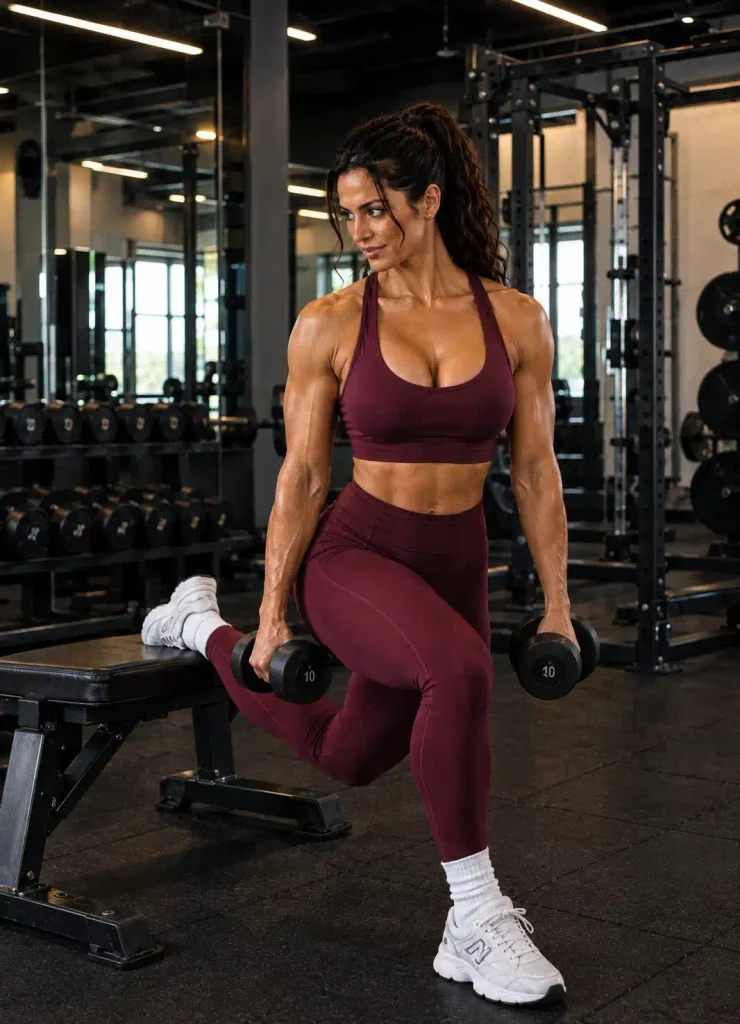
3. Seated Row
Muscles worked: Back, shoulders, and biceps.
The seated row is an excellent exercise for strengthening your back and improving your pulling strength.
It’s commonly performed using a cable machine or a seated rowing machine.
How to perform it:
- Sit on the machine and place your feet securely on the supports.
- Hold the handles with your arms extended comfortably.
- Keep your back in a natural position.
- Pull the handles toward your torso.
- Slowly extend your arms to return to the starting position.
Try to avoid swinging your body to move the weight. Focus on controlled movements.
Beginner suggestion: 2 sets of 10 repetitions.
4. Lying Hamstring Curl
Muscles worked: Hamstrings.
The hamstring curl is a machine-based exercise that focuses on the muscles at the back of your thighs.
It’s a useful addition to a balanced lower-body workout.
How to perform it:
- Lie face down on the machine.
- Adjust the machine so the padded roller sits comfortably above your heels.
- Hold the handles if available.
- Bend your knees to bring your heels toward your body.
- Slowly lower your legs to the starting position.
Use a comfortable weight and avoid making sudden movements.
Beginner suggestion: 2 sets of 10 repetitions.
5. Dumbbell Bicep Curls
Muscles worked: Biceps.
Bicep curls are a simple exercise that can help you develop arm strength.
You only need a pair of suitable dumbbells.
How to perform them:
- Stand with your feet comfortably apart.
- Hold a dumbbell in each hand with your palms facing forward.
- Keep your elbows close to your sides.
- Slowly bend your elbows to raise the dumbbells.
- Lower the weights in a controlled manner.
Try to keep your upper arms still rather than swinging the weights.
Beginner suggestion: 2 sets of 10 repetitions.
6. Triceps Extensions
Muscles worked: Triceps.
Triceps extensions focus on the muscles at the back of your upper arms.
You can perform this exercise with a light dumbbell or a suitable gym machine.
How to perform them:
- Hold a light dumbbell with both hands.
- Raise it carefully above your head.
- Keep your elbows comfortably positioned.
- Slowly bend your elbows to lower the weight behind your head.
- Extend your arms to return to the starting position.
Keep the movement controlled and avoid using a weight that causes discomfort.
Beginner suggestion: 2 sets of 8–10 repetitions.
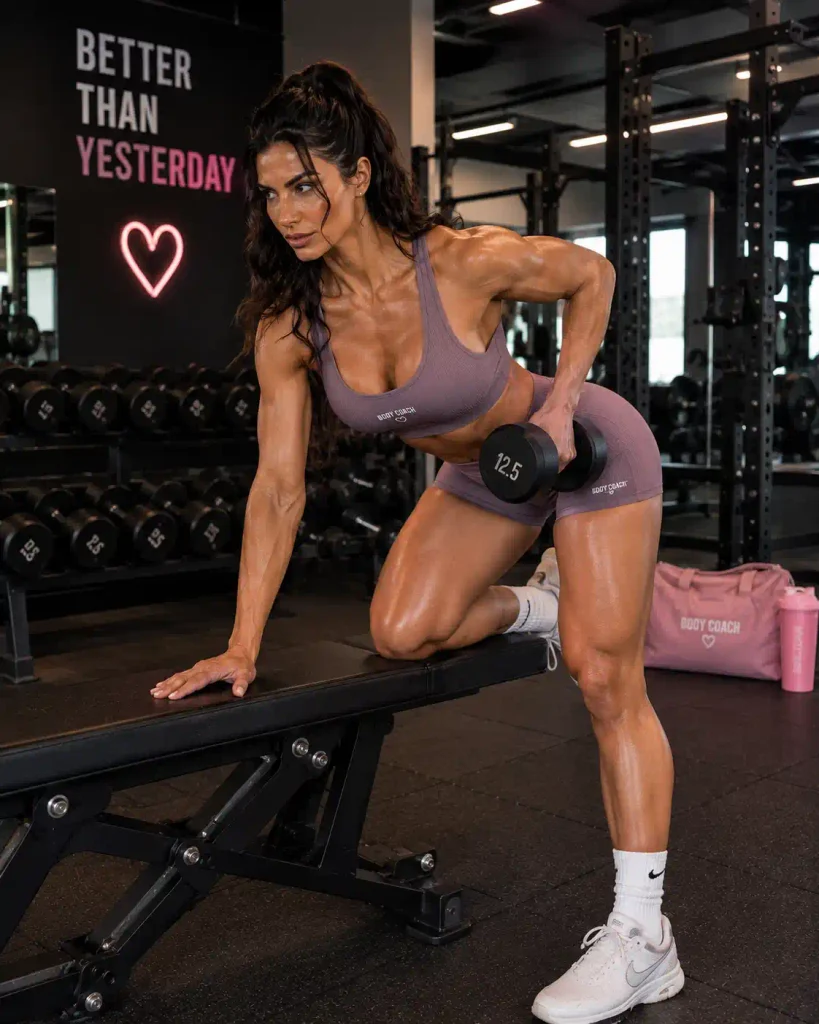
7. Push-Ups
Muscles worked: Chest, shoulders, triceps, and core.
Push-ups are a versatile bodyweight exercise that can be performed almost anywhere.
If you’re just starting, you can make them easier by placing your hands on a sturdy elevated surface.
How to perform them:
- Place your hands slightly wider than your shoulders.
- Extend your legs behind you or use a modified position.
- Keep your body comfortably aligned.
- Bend your elbows to lower your chest.
- Push through your hands to return to the starting position.
Move slowly and choose a variation that allows you to maintain good form.
Beginner suggestion: 2 sets of 5–8 repetitions.
8. Russian Twists
Muscles worked: Core muscles.
Russian twists are a seated exercise that involves rotating your upper body.
They can be performed without equipment, making them a convenient option for home workouts.
How to perform them:
- Sit on the floor with your knees bent.
- Keep your feet on the ground.
- Lean back slightly while maintaining a comfortable, stable position.
- Slowly rotate your upper body to one side.
- Return to the centre and repeat on the other side.
Keep the movement controlled and avoid twisting farther than feels comfortable.
Beginner suggestion: 2 sets of 8 repetitions per side.
If this movement feels uncomfortable, try a simple seated core exercise instead.
A Simple Full-Body Workout Plan for the Gym
Here is an example of how you can combine the exercises into one workout.
| Exercise | Sets | Repetitions |
|---|---|---|
| Bodyweight squats | 2 | 8–10 |
| Seated shoulder press | 2 | 8–10 |
| Seated row | 2 | 10 |
| Lying hamstring curl | 2 | 10 |
| Dumbbell bicep curls | 2 | 10 |
| Triceps extensions | 2 | 8–10 |
| Modified push-ups | 2 | 5–8 |
| Russian twists | 2 | 8 per side |
Before starting: Spend a few minutes warming up with gentle movement, such as walking or cycling. Practise each exercise with a light weight or no weight before increasing the difficulty.
During your workout: Rest between sets whenever you need to. Focus on proper technique rather than rushing to finish.
After your workout: Finish with some gentle movement and allow yourself time to recover.
If you’re new to the gym, consider asking a qualified trainer to demonstrate unfamiliar exercises and help you adjust the equipment.
How to Exercise at Home Without a Gym
You don’t need a gym membership to enjoy the benefits of physical activity.
A few simple exercises can help you build strength and improve your coordination at home.
Here are four options.
1. Bodyweight Squats
Stand with your feet comfortably apart and slowly bend your knees and hips.
Lower yourself as far as you can comfortably manage, then return to standing.
Keep your movements controlled and use a chair for support if necessary.
2. Wall Push-Ups
Wall push-ups are a beginner-friendly alternative to traditional push-ups.
Stand facing a wall and place your hands against it at shoulder height.
Bend your elbows to bring your upper body toward the wall, then push gently back to your starting position.
3. Glute Bridges
Lie on your back with your knees bent and your feet flat on the floor.
Gently lift your hips while keeping your shoulders on the floor.
Pause briefly, then lower your hips slowly.
This exercise helps strengthen your glutes and other muscles around your hips.
4. Bird Dogs
Start on your hands and knees with your back in a comfortable, neutral position.
Slowly extend one arm forward and the opposite leg backward.
Return to the starting position and repeat on the other side.
Move slowly and focus on maintaining your balance.
These exercises can be adapted to different fitness levels. Start with a comfortable number of repetitions and take breaks whenever necessary.
Tips for Getting the Most Out of Your Workout
Building a regular exercise routine takes time. Rather than trying to do everything at once, focus on a few simple habits.
1. Start at your own pace
You don’t need to copy someone else’s workout. Choose exercises that match your current experience and gradually learn new movements.
2. Focus on technique
Good technique helps you perform exercises safely and effectively. If you’re unsure about a movement, ask a qualified trainer for guidance.
3. Make recovery a priority
Your body needs time to recover after challenging exercise. Make sure you get enough sleep and take rest days when needed.
4. Eat regular, balanced meals
Food provides the energy your body needs for exercise and everyday activities. Include a variety of foods and avoid skipping meals to compensate for workouts.
5. Stay hydrated
Drink water regularly throughout the day, especially when you’re physically active.
6. Choose activities you enjoy
You don’t have to spend every workout lifting weights. Walking, dancing, cycling, swimming, and playing sports are all ways to stay active.
7. Be patient with yourself
Fitness is a personal journey. Your strength, coordination, and confidence can improve gradually with practice. There is no need to rush or compare your progress with anyone else’s.
Frequently Asked Questions About Full-Body Workouts
1. Are full-body workouts suitable for beginners?
Yes. Full-body workouts can be adapted for beginners by choosing simple exercises, using comfortable resistance, and taking enough rest between sets.
Starting with bodyweight movements is a practical way to learn the basics.
2. How many days a week should women do strength training?
The ideal schedule depends on your age, experience, health, and activity level.
For beginners, two strength-training sessions on separate days can be a manageable starting point. You can adjust your routine as you become more experienced.
3. Can I do a full-body workout at home?
Absolutely. Exercises such as squats, wall push-ups, glute bridges, and bird dogs require little or no equipment.
You can create a simple home routine using movements that feel comfortable and appropriate for your fitness level.
4. Do I need heavy weights to build strength?
No. Beginners can develop strength using bodyweight exercises or light resistance.
As you become more comfortable with an exercise, you can gradually increase the challenge while maintaining good technique.
5. Is cardio important alongside strength training?
Cardio is a useful part of a balanced fitness routine. Activities such as walking, swimming, cycling, and dancing support cardiovascular health and can be enjoyable ways to stay active.
You can combine cardio and strength training according to your interests and energy levels.
6. How long should a full-body workout take?
A beginner-friendly workout may take around 30–45 minutes, depending on the number of exercises, your rest periods, and your experience.
There’s no need to rush. A shorter session with controlled movements can be more useful than a longer session performed with poor technique.
7. Can women of different ages do strength training?
Many women can benefit from strength training at different stages of life. However, the exercises and intensity should be appropriate for the individual’s experience, health, and abilities.
Anyone with health concerns or uncertainty about exercising should seek advice from a qualified healthcare professional.
Final Thoughts
A good full-body workout doesn’t have to be complicated. A combination of simple strength exercises, enjoyable physical activities, and sufficient recovery can help you build a healthy and sustainable fitness routine.
Start with movements you feel comfortable performing, pay attention to your technique, and give yourself time to learn.
Most importantly, remember that exercise isn’t just about appearance. It’s an opportunity to improve your strength, support your health, and feel more confident in what your body can do.
The best workout is one that fits your life, feels manageable, and keeps you coming back because you enjoy it.
Suggested SEO title: Full-Body Workout for Women: A Simple Beginner-Friendly Gym Plan
Meta description: Discover a beginner-friendly full-body workout for women, including eight simple gym exercises, a home workout, and practical tips for building strength and improving fitness.
Suggested URL slug: full-body-workout-for-women
Focus keyword: Full-body workout for women
Additional keywords: Beginner gym workout for women, women’s strength training, full-body gym routine, home workout for women, beginner fitness exercises.



Comments are closed.
[…] Whether you’re a regular gym-goer or just getting started with fitness, this guide will help you understand your options and find workou… […]